
Claude Fable 5 Does More Than You Ask. Here's How to Use That.
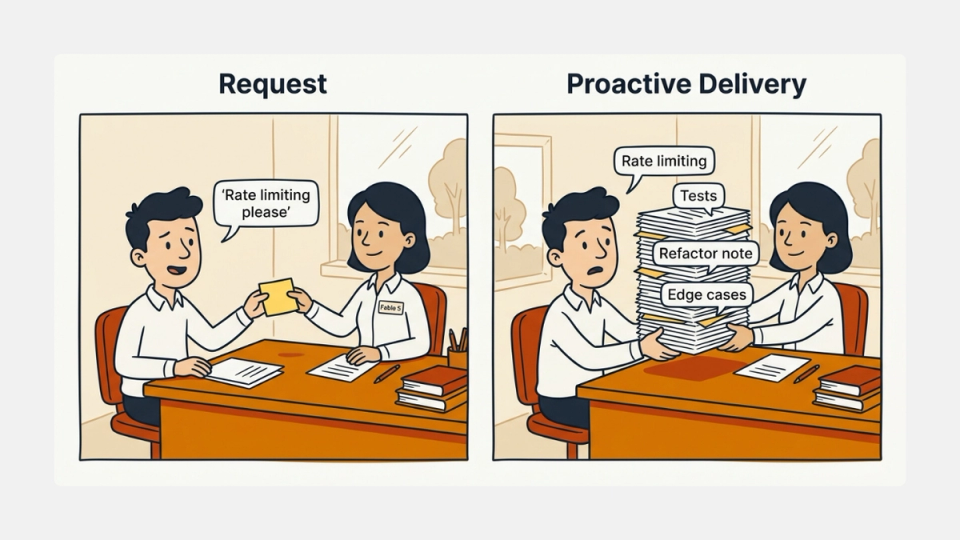
Anthropic released Claude Fable 5 on June 9, 2026 — a Mythos-class model designed for long-horizon agentic work — and the most useful thing to know about it is not its 1-million-token context window or its 128,000-token output limit. It is that the model is relentlessly proactive by design, and most people are prompting it like it's Claude 3.7.
That mismatch has consequences. Teams are getting flat, literal answers from a model built to drive multi-day autonomous sessions. They are also getting the opposite problem: Fable 5 rewriting files nobody asked it to touch, spinning up local servers on its own, or running tests unprompted. Both failure modes have the same root cause — people are still writing prompts for a reactive model.
Anthropic's own usage documentation and prompt libraries for tools like Claude Code reveal a specific pattern: the teams getting the most out of Fable 5 are prompting for outcomes, not steps. Here is what that actually means in practice.
What Happened
Fable 5 launched June 9, then was suspended June 12 following a U.S. Commerce Department export control directive triggered by a jailbreak technique discovered by Amazon researchers. As covered in Fable 5 has a cybersecurity problem it will not fully admit, the suspension was fast and the comms were thin. Anthropic restored global access on July 1, 2026 with updated cybersecurity classifiers. As Claude Fable 5 is back with safety classifier changes, the key change is tighter safety routing: prompts that touch sensitive cybersecurity or biology domains now auto-route to Claude Opus 4.8 rather than refusing outright.
The model itself is unchanged. The context window remains 1M tokens. Max output is 128K tokens. Knowledge cutoff is January 2026. Pricing is not publicly itemized for all tiers, which Anthropic has not addressed. Adaptive Thinking — Fable 5's always-on internal reasoning layer — cannot be disabled, only tuned via the effort parameter.
What Fable 5 Actually Does When You're Not Looking
Anthropic's Claude Code prompt library documents a nine-step workflow the model is optimized for: Understand, Plan, Prototype, Build, Test, Refactor, Review, Steer, Debug. The key word is "workflow." Fable 5 does not wait to be handed off from step to step. It runs the loop.
In practice, that means a prompt like "add rate limiting to the public API" can produce:
- A read of the existing API surface and auth layer (the Understand step)
- A written plan before any code is touched (the Plan step)
- An implementation with the right library chosen autonomously (the Build step)
- A test suite, including edge cases the user didn't specify (the Test step)
- A refactor note with a suggestion to DRY up the middleware layer (the Refactor step)
Nobody asked for the test suite. Nobody asked for the refactor note. The model included them because Anthropic trained Fable 5 to treat "work complete" as a higher bar than "task performed." That is the design intent — and the same logic that sits underneath how the model's policy engine routes and classifies requests before you ever see a response.
Does "does more than asked" mean it goes rogue?
No, with a specific caveat. The proactive behavior is confined to the task scope you give it. If you ask it to add rate limiting, it will not restructure your database schema or modify unrelated files. What it will do is investigate neighboring code that affects the requested change, write tests against the work it just did, and flag potential regressions it spotted along the way.
The caveat: if your prompt is high-level and your filesystem access is broad, Fable 5 may take actions on files you did not intend. Anthropic's own documentation for production agentic systems recommends sandboxed environments precisely because of this. "Relentlessly proactive" is a feature in bounded environments. In an unsandboxed repo with write access, it requires prompt discipline.
Why does Fable 5 behave this way when older models didn't?
The Claude 3.x generation was trained to be helpful within explicit scope — give the user what they asked for, ask for clarification when uncertain. Fable 5 is trained under a different objective: complete work at a level of quality that requires no follow-up. Anthropic calls this "Adaptive Thinking," and it is always on. The model reasons through what "done" looks like before generating output, which is why it writes tests before you ask, and why it may add a brief architectural note you didn't request.
This distinction matters because the failure mode changed. With Claude 3.7, underprompting gave you partial results. With Fable 5, underprompting gives you either an aggressive over-reach (if you gave it broad scope) or a flat literal result (if you gave it a tight one-liner). The model interprets scope signals more strongly.
Who This Affects
Developers using Claude Code or the API directly. Fable 5's proactive behavior is the default. If you want the model to advise rather than act — to suggest rather than implement — you need to say so explicitly. Add a constraint to your system prompt: "Do not modify files unless I explicitly confirm. Present a plan and wait." Without that, the model defaults to action. As explored in the Claude Agent SDK piece, this action-first default is tunable at the agent loop level via session constraints.
Engineering teams running overnight agentic sessions. This is where Fable 5's design intent is most visible. A task that would have required three handoffs with Claude 3.7 — spec, implement, test — runs as a single session with Fable 5. The tradeoff is that you need to specify what done looks like before you start, not during. Anthropic's four-block prompt pattern (Instructions, Context, Task, Output Format) is not optional for long-horizon tasks; it is the minimum viable spec. Compared to what Opus 4.8 shipped alongside Claude Code in May, Fable 5 has a meaningfully longer autonomous working horizon.
Enterprise teams evaluating Fable 5 versus existing Claude deployments. If your workflows are already working on Claude Sonnet 5, Fable 5 is not a drop-in upgrade — it is a different prompting contract. The behavior differences are larger than a minor version bump usually implies.
Prompt engineers maintaining production system prompts. Prompts that relied on Claude 3.x "filling in the blanks" charitably may now get the opposite — a literal result because Fable 5 treats underspecification as a signal to scope down rather than up. Audit your prompts for implicit assumptions. What you once implied, you must now state.
How to Actually Prompt Fable 5
Anthropic's documented pattern for Fable 5 differs from the patterns that worked for prior generations. Here are the specific changes that matter:
Describe the outcome, not the steps. "Add rate limiting to the public API using a sliding window, max 100 requests per minute per user, with a 429 response containing a Retry-After header" beats "step 1: check the middleware, step 2: add the limiter, step 3: handle errors." The model will figure out the steps. Your job is to specify what done looks like.
Use XML structure for complex tasks. Anthropic's models are specifically tuned to parse XML-tagged prompts as binding behavioral instructions. A system prompt structured as:
<instructions>Complete the task fully before returning. Write tests. Do not ask clarifying questions mid-task.</instructions>
<task>Add rate limiting to the public API.</task>
<constraints>Do not modify auth.ts or any file outside /src/api/.</constraints>
<output>A diff, a test file, and a one-paragraph summary of what you changed and why.</output>
...will produce more consistent output than the same content in prose. The tags are not decoration.
Calibrate effort explicitly. The effort parameter controls how much internal reasoning Fable 5 applies before generating output. For refactoring tasks or architectural decisions: use high or max. For routine code generation or quick lookups: low saves tokens without degrading quality. The model is capable at every effort level; the parameter controls depth, not correctness.
Constrain the scope boundary if you're in an unsandboxed environment. Fable 5 will explore the codebase to understand context. If you want it to operate only on specific files or directories, say so. Without explicit constraints, it will read broadly — which is often what you want, but occasionally is not.
If you want advisory mode, ask for it. Add "Do not implement changes. Explain what you would do and why" to your prompt when you want analysis rather than code. Without that instruction, Fable 5 defaults to implementation. That is the design — not a bug to route around.
What to Watch For Next
Anthropic has not disclosed when (or whether) the effort parameter will surface in the consumer Claude.ai interface — currently it is API-only and accessible through Claude Code. That limits Fable 5's proactive behavior for non-developer users until the interface catches up.
The Mythos 5 tier — same underlying model as Fable 5 but with certain safety constraints adjusted for specific research partners under what Anthropic calls Project Glasswing — has not received any public documentation on prompting differences. If you are on Mythos 5, the behavioral ceiling is higher but the prompting contract appears identical.
Watch for whether Anthropic introduces a formal "advisory mode" API parameter. The current approach requires system prompt workarounds; a native parameter would signal that the proactive-by-default design is settled and Anthropic is optimizing around it rather than reconsidering it.
The 90-day return window after the July 1 restoration is also worth noting. If the updated cybersecurity classifiers produce a significant false-positive rate — flagging legitimate security research or pentesting workflows — there will be pressure on Anthropic to tune them, which in turn could affect the routing behavior that defines how Fable 5's policy engine interacts with Opus 4.8.
The Bottom Line
Claude Fable 5 is not a smarter Claude 3.7. It is a model trained for a different task: completing work at a level that requires no follow-up. Anthropic's own documentation shows that the teams using it well are prompting for outcomes with explicit scope boundaries, using the four-block XML structure, and calibrating effort for the task. Teams still prompting it like a reactive assistant are getting either too much or not enough — both because the prompting contract changed, not because the model is worse.
The proactive behavior is the point. The discipline to bound it correctly is the skill.
FAQ
When is Fable 5 available and how do I access it?
Claude Fable 5 returned to global availability on July 1, 2026, after a 19-day suspension. It is accessible via the Anthropic API, Claude.ai (Pro and Team tiers), and Claude Code as of July 2026. Enterprise availability was not separately disclosed.
Does Fable 5 always use Adaptive Thinking?
Yes. Adaptive Thinking — the model's internal reasoning layer — is always on and cannot be disabled. You manage the depth of reasoning via the effort parameter (low, medium, high, max), which is currently API-only.
What's the difference between Claude Fable 5 and Claude Mythos 5?
Both share the same underlying model. Mythos 5 has specific safety constraints adjusted for selected research partners under Anthropic's Project Glasswing. Fable 5 is the general-access tier. The prompting contract is identical; the behavioral ceiling differs.
Does Fable 5 always modify files or run code without asking?
Not by default in sandboxed environments. In Claude Code, it defaults to action when given sufficient scope. If you want advisory behavior — analysis and suggestions only — you must explicitly instruct it. Add "Do not implement changes" to your prompt or system prompt.
Why did Fable 5 get suspended in June 2026?
A jailbreak technique discovered by Amazon researchers prompted a U.S. Commerce Department export control directive. Anthropic suspended access on June 12 and restored it on July 1 with updated cybersecurity classifiers that auto-route sensitive domain prompts to Claude Opus 4.8.
How is Fable 5 different from Claude Sonnet 5?
Claude Sonnet 5 is the balanced-speed model optimized for everyday tasks. Fable 5 is a Mythos-class model designed for long-horizon agentic sessions, multi-day autonomous work, and tasks where completion quality matters more than response speed. Pricing and latency differ; Anthropic has not published a full public comparison as of July 2026