
Claude Opus 4.8 and Claude Code Just Shipped a Platform, Not a Model

Anthropic released Claude Opus 4.8 on May 28, 2026, alongside a wave of Claude Code updates that together reframe what the product actually is. The model is sharper and more honest. The tooling is more autonomous and more controllable. Taken together, this is not a point release — it is Anthropic making a platform argument.
What Happened
Opus 4.8 launches at the same price as Opus 4.7: $5 per million input tokens, $25 per million output tokens, per Anthropic's pricing page. No premium for the model upgrade. Fast Mode (2.5x speed, $10/$50 per million tokens) costs three times less than Fast Mode on prior Opus models.
The model benchmarks are solid without being dramatic:
| Benchmark | Opus 4.7 | Opus 4.8 |
|---|---|---|
| SWE-bench Pro | 64.3% | 69.2% |
| SWE-bench Verified | 87.6% | 88.6% |
| Agentic Computer Use | 82.8% | 83.4% |
| Multidisciplinary Reasoning (w/ tools) | 54.7% | 57.9% |
| Terminal-Bench 2.1 | 66.1% | 74.6% |
The number Anthropic chose to lead with is not a benchmark at all. It is a honesty claim: Opus 4.8 is approximately four times less likely than Opus 4.7 to let code flaws pass unremarked. The model's alignment assessment also reports new highs in prosocial traits — supporting user autonomy, flagging its own uncertainty, refusing misuse — with rates of misaligned behavior substantially lower than Opus 4.7 and comparable to Claude Mythos Preview.
The reason Anthropic leads with honesty rather than SWE-bench is intentional. In long-running agentic tasks — the only context where Opus 4.8 actually earns its price — a model that silently glosses over its own mistakes is not just unhelpful, it is actively dangerous. This is the same logic that drove Anthropic's zero-day research: constraint first, capability second.
What Claude Code Shipped Alongside It
The Claude Code updates are the more operationally interesting half of this release.
Dynamic Workflows (research preview): This is the headline feature. In Claude Code CLI, Desktop, and VS Code, you can now ask Claude to plan work and spawn tens to hundreds of parallel subagents that tackle different slices of a problem simultaneously. Each subagent verifies and refutes the others' outputs before the orchestrator surfaces a final result. Monitoring is via a new /workflows command.
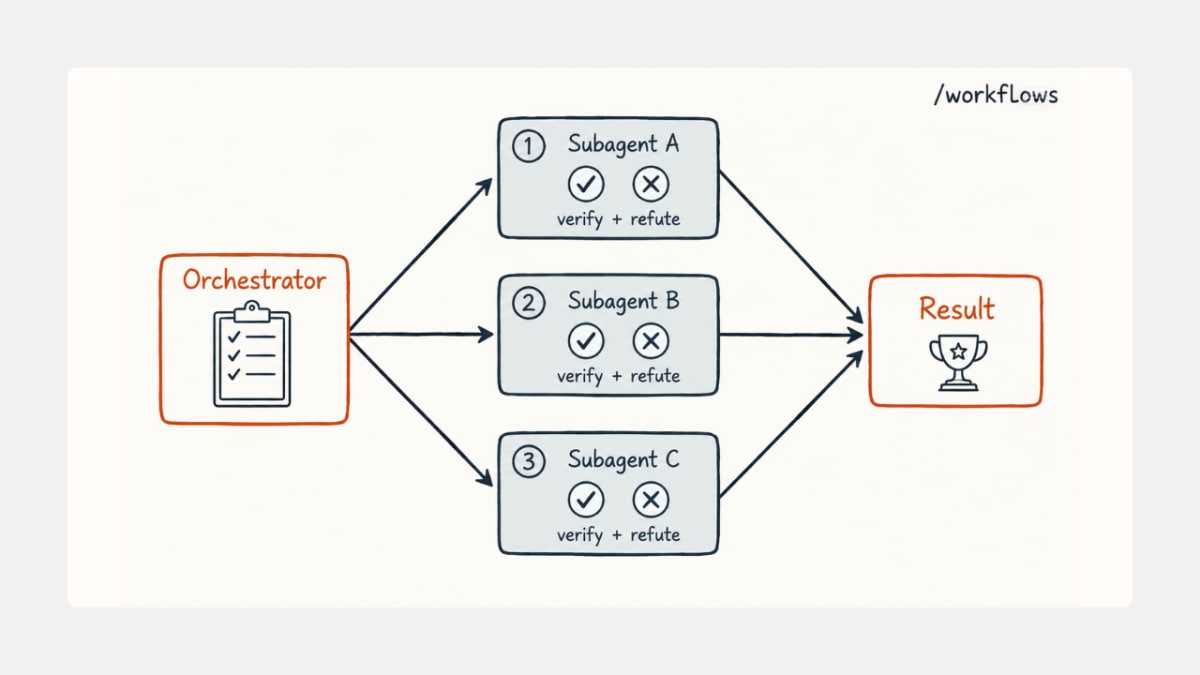
There is no premium pricing for Dynamic Workflows. Subagents consume tokens at standard Opus 4.8 rates. The catch: it is in research preview for Max, Team, and Enterprise plans only. API and Pro plan users do not have access yet. Anthropic has not disclosed a GA timeline.
Effort Control: Users on claude.ai and Cowork can now slide effort from Low (faster, fewer tokens) to Max (deepest reasoning). Claude Code defaults Opus 4.8 to "high" effort, with "extra" for the hardest tasks. This is meaningful cost control per task type. The most expensive file in your repo just got a dial — and now a slider next to it.
Mid-task system prompts (Messages API): Developers can now inject system entries mid-task within the messages array without breaking prompt caching or requiring a new user turn. For anyone building on the Claude Agent SDK for production agent workflows, this unlocks mid-flight instruction updates without resetting context.
Lean system prompt by default: Opus 4.8 ships with a lightweight system prompt as the new default (Haiku and Sonnet excluded). Less boilerplate context means lower baseline token cost and faster first-token latency.
Claude Code stabilization (versions 2.1.153-2.1.154): Subagent output being silently discarded is fixed. Worktree-isolation bypasses are closed. MCP security is tightened so subagent-defined servers respect enterprise policies and --strict-mcp-config. A memory leak that could balloon sessions to several GB when resuming on machines with many saved transcripts is resolved.
Smarter interrupts: Claude Code now reserves multi-choice prompts for decisions it genuinely cannot resolve. If it has enough context to proceed, it proceeds.
Does This Change Anything for Existing Users?
If you are already on Claude Code: Yes. Effort Control and the lean system prompt take effect immediately. Dynamic Workflows requires Max, Team, or Enterprise. The subagent and MCP stability fixes are worth pulling the update for on their own.
If you are building on the API: Mid-task system prompt support and the lean default are the biggest changes. Fast Mode is three times cheaper if you were already using it. Standard pricing unchanged.
If you are evaluating Anthropic vs. OpenAI for agentic dev tooling: The Codex vs Claude Code vs Gemini CLI May 2026 comparison is worth revisiting with this release in hand. Dynamic Workflows is Anthropic's answer to Codex's cloud agent mode — but Codex's agent runs are more accessible (Pro and Team, not Max-only). The honest model advantage is harder to spec but matters most in long unsupervised runs.
If you are a solo developer on Pro: The model upgrade is yours. Dynamic Workflows is not. If you are hitting the limits of single-agent runs, watch the GA announcement.
What the Honesty Claim Actually Means
Anthropicnarrowly missed making this just another benchmark drop. The honesty improvement is not a soft alignment metric. It is a practical engineering constraint. A model that flags its own code flaws proactively means fewer silent regression bugs in autonomous runs, fewer human review cycles, and a meaningful reduction in the confident-but-wrong failure mode that makes teams reluctant to push Claude Code further into CI pipelines.
This is the implicit argument Anthropic is making with the whole release: trust the agent enough to let it run longer. Dynamic Workflows only works if you trust what comes back. Effort Control only matters if the model is worth the tokens at Max. The honesty improvement is the foundation.
When OpenAI admitted that Anthropic's playbook was right, it was a signal about where the industry is heading. Anthropic is not just shipping an honest model — they are betting that honesty is the actual product differentiation as agentic runs get longer and human oversight gets thinner.
If you are weighing Opus 4.8 against open-weight alternatives, the DeepSeek V4 Pro cost-beats-lag breakdown is useful context. At Max effort, Opus 4.8 is expensive. DeepSeek V4 Pro at $0.27/$1.10 per million tokens is a real alternative for teams that do not need the safety profile or Claude Code's tooling depth.
What to Watch For
- Dynamic Workflows GA date. Still unannounced. If it reaches Pro and Team access, it becomes the strongest end-to-end argument for Claude Code over Codex for large-scale autonomous work.
- Token cost at scale. Parallel subagents at standard rates add up fast. Watch for per-workflow budget controls or batch discounts.
- Effort Control on the API. Currently UI-only on claude.ai and Cowork. API parity would unlock real cost optimization for developers.
- The next model cycle. The benchmarks for Opus 4.8 vs GPT-5.6 are already being written. The four questions that decided Opus 4.7 vs GPT-5.5 apply here too.
The Bottom Line
Opus 4.8 is a solid model update — better benchmarks, no price increase, and a meaningful honesty improvement that matters most in the agentic context where it will be used. The Claude Code updates are the real story: Dynamic Workflows is the most ambitious thing Anthropic has shipped for autonomous development, Effort Control gives teams practical cost levers, and mid-task system prompts open the Messages API for use cases that were awkward before.
Anthropicis not trying to win on raw benchmark numbers. They are trying to be the AI coding stack you trust enough to run unsupervised. That is a harder thing to market and a harder thing to copy.
FAQ
When does Dynamic Workflows reach general availability?
Anthropic has not announced a GA date. It is in research preview for Max, Team, and Enterprise Claude Code users via CLI, Desktop, and VS Code.
Does Opus 4.8 cost more than Opus 4.7?
No. Standard pricing is unchanged at $5/$25 per million input/output tokens. Fast Mode dropped to $10/$50 per million tokens, three times cheaper than the prior Opus Fast Mode.
What is the lean system prompt change?
Opus 4.8 ships with a lighter default system prompt. Less context per call means lower baseline token spend and better first-token latency. Haiku and Sonnet are unaffected.
Can I use mid-task system prompts today?
Yes, via the Messages API on Opus 4.8. You can inject system entries mid-conversation without breaking prompt caching. Not available on Opus 4.7.