
OpenAI Is Leaving Cursor. The Real Risk Is Lock-In
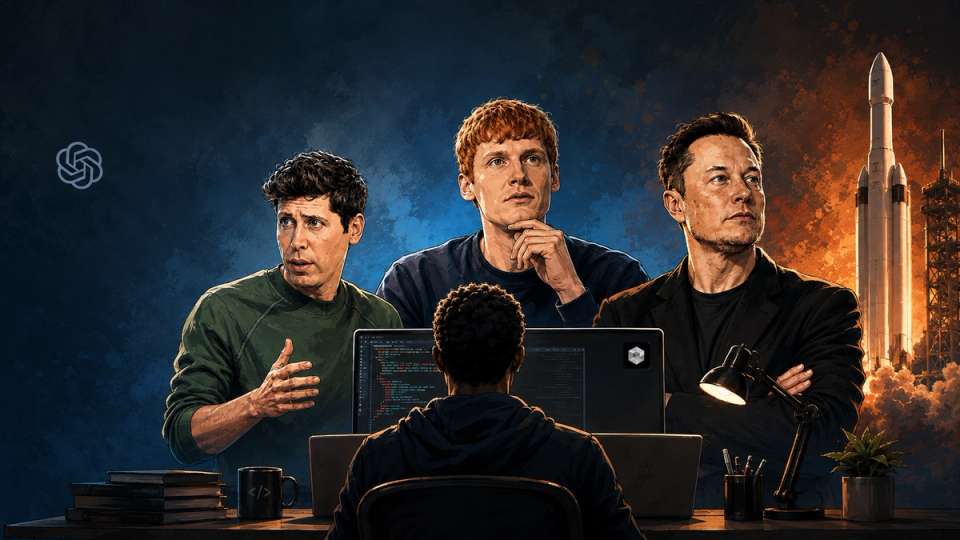
OpenAI announced on August 28, 2026 that it intends to wind down the contract providing its models to Cursor, two weeks after Cursor confirmed its acquisition by SpaceX. The proposed shutoff date is November 12, not today. Until then, Cursor users should retain access to the OpenAI models covered by the agreement, although Cursor may end access sooner.
That timeline matters less than the dependency it exposes. Cursor became valuable partly because developers could choose among OpenAI, Anthropic, Google, and Cursor models inside one editor. Now one acquisition has turned a model choice into a contract dispute. The practical lesson is simple: if your code workflow depends on a model you do not control, portability is a feature, not a nice-to-have.
What Happened
Cursor’s parent company, Anysphere, said on August 14 that it had officially been acquired by SpaceX. Cursor described the deal as the completion of a process that began in April with a SpaceXAI partnership intended to accelerate model training. The company said the acquisition would give it access to SpaceX’s computing infrastructure and that Grok 4.6 offered an early look at what the combined operation could build. Our earlier report on SpaceX acquiring Cursor covered the deal’s $60 billion valuation. Cursor’s acquisition announcement did not say that third-party models would be removed from the product.
OpenAI’s announcement came on August 28. It said the companies had worked together for nearly four years, but that OpenAI could not be confident SpaceX would use its technology within OpenAI’s terms of service. OpenAI pointed to its experience with Musk-owned companies and said a change-of-control clause in its custom agreement with Cursor gave it a limited cancellation window.
OpenAI said it would give the maximum notice allowed by the contract. It also said it would not provide future models to Cursor during the transition. The company specifically mentioned Astra, its upcoming model, as a reason to ensure new capabilities are used under its terms.
The OpenAI announcement calls November 12 a proposed shutoff date. That wording matters. The companies have not published a final termination confirmation, and OpenAI says Cursor may choose to end access sooner.
The immediate options are not limited to abandoning Cursor. OpenAI’s help guidance says developers can bring their own OpenAI API key, use the Codex IDE extension with a ChatGPT subscription or API key, or connect through a compatible gateway such as Amazon Bedrock or Azure. Those paths have different billing, privacy, and administration consequences.
Cursor’s current documentation still lists OpenAI, Anthropic, Google, SpaceXAI, and other providers. It separates Cursor Models, including Grok 4.6, Grok 4.5, and Composer 2.5, from an Other Models pool for third-party models. Cursor has not announced that every third-party model will disappear. The confirmed change concerns OpenAI’s direct contract and future model access.
Why does OpenAI care about a coding editor it does not own?
OpenAI is protecting the distribution layer around increasingly capable models. Cursor is not just a text editor. It is a workflow that can read repositories, call tools, edit files, and run long-lived agents. OpenAI’s concern is that a post-acquisition integration could create safety, compliance, or model-use risks it cannot govern directly.
The public explanation is about contractual trust, but the commercial logic is broader. A foundation-model company can tolerate broad distribution while a partner is independent. After an acquisition, that partner becomes part of a competitor’s product and data strategy. The same integration now carries a different strategic risk.
OpenAI is also drawing a boundary around future models. It is not merely saying, “We will stop supporting an old endpoint.” It says Cursor will not receive future models under the existing relationship. That is a decision about where the next generation of capability is allowed to compound.
Cursor’s own response emphasizes the opposite advantage: compute and distribution. The company says it now has access to SpaceX’s GPU fleet and wants to build more capable models at lower cost. At the acquisition announcement, Musk ally and investor Jason Calacanis described the deal as the most important move since Meta bought Instagram or Google bought YouTube, according to Cinco Días’ report.
That framing explains why OpenAI is moving now. Cursor is not becoming a passive shell around SpaceXAI. It is becoming a distribution channel for a vertically integrated model-and-editor stack. The contest is shifting from “which model can Cursor add?” to “whose models, agents, and developer data will define the default coding loop?”
Will Cursor become a SpaceXAI-only editor?
Not based on the information available today. Cursor’s documentation still lists multiple providers and separates its own model pool from third-party models. The confirmed decision removes OpenAI’s direct relationship on a proposed date, but it does not prove that Anthropic, Google, or every external provider will leave.
This is where the loudest headlines get ahead of the evidence. Cursor can still offer other models. It can also offer access through a user-supplied API key or gateway, depending on the provider’s policies. But those workarounds are not the same as a first-party, bundled integration. They may change cost, latency, data handling, rate limits, or administrator control.
The more important question is whether Cursor’s incentives change. Its current model-pricing documentation says the Cursor Models pool includes Grok 4.6, Grok 4.5, and Composer 2.5, while third-party models are charged at model API prices. That pricing structure gives Cursor a reason to steer usage toward models it controls economically.
This does not make Cursor unusable. It makes the default route worth inspecting. Teams should track which model actually handles each request, whether Auto routing changes without clear notice, and how much a workflow costs when the model pool changes. “Model choice” is not real portability if the product makes one route cheap, another expensive, and a third unavailable.
What should Cursor users do before November 12?
Do not wait for the final cutoff. Run a small portability test now: take ten representative coding tasks, execute them through your current Cursor workflow and one alternative, then compare verified completion, retries, tool failures, review time, and total cost. Preserve prompts, rules, context files, and test commands so the editor is not the only place your process exists.
For solo developers, the first step is low effort. Export your project rules, reusable prompts, MCP or tool settings, and any agent instructions. Test a second editor or a direct API path on a copy of a repository. Keep the current setup until the alternative can complete the tasks you actually care about.
For engineering teams, treat this as a vendor-continuity exercise. Record the models behind your most important workflows, identify whether billing is bundled or pass-through, and check whether your enterprise agreement specifies model availability after a change of control. A migration plan that only says “we can use another model” is not a plan until the permissions, audit logs, privacy settings, and review gates also work.
For platform and security teams, test the boundary between the editor and the model provider. OpenAI’s bring-your-own-key path may preserve access, but it can move billing and governance into a different control plane. A gateway may centralize policy, but it adds another dependency. The right choice depends on whether your priority is continuity, centralized governance, predictable spend, or minimal operational change.
The earlier analysis of Cursor’s control-room direction is useful context here. As coding tools become agent workspaces, a provider change can affect file access, background execution, review flows, and cloud agents, not only the answer in a chat panel.
The deeper shift: model neutrality is becoming conditional
Cursor’s original pitch benefited from abundance. Developers could bring a preferred model into a single environment and compare results in the same repository. That was powerful because the editor owned the workflow while model providers competed for the call.
The SpaceX acquisition changes the power balance. Cursor now has a strategic reason to develop and promote its own models. OpenAI has a strategic reason to protect its models from a company it considers a direct competitive risk. The neutral layer is still there, but neutrality is no longer guaranteed by product design alone.
This is the same pattern seen across agent platforms. The interface looks interchangeable because the model picker has several names. Underneath, each provider controls terms of service, data use, future access, pricing, and safety requirements. The picker is a user interface. The contract is the architecture.
The recent analysis of the Cursor and Grok flywheel made the first half of this shift visible: Cursor can supply a high-value environment where models are used on real software tasks. OpenAI’s exit makes the second half visible: the environment is also strategically valuable, and providers may not want to donate that distribution to a rival forever.
What to watch next
Three signals will tell us whether this becomes a contained vendor transition or a broader model exodus.
First, watch for a final termination date and any change in the wording of Cursor’s model documentation. Second, watch Anthropic and Google. Their continued access would show that Cursor can remain a multi-provider editor; new restrictions would show that the acquisition is changing partner risk calculations across the industry. Third, watch whether Cursor makes its own models the default, expands their included usage, or changes routing and pricing.
The next 30 days matter more than the next hot take. Teams should compare current and alternative workflows before the deadline, not after a model disappears from a menu. The six-month question is whether Cursor’s advantage becomes better agents built on dedicated compute or a narrower product with fewer independent model choices.
The bottom line
OpenAI is not instantly deleting its models from Cursor. It is giving notice that the relationship is ending, with November 12, 2026 proposed as the direct-access cutoff. Cursor remains a multi-provider editor today, and OpenAI lists several ways to keep using its models.
But the story is bigger than one contract. A model-neutral tool can become strategically aligned after an acquisition, and a model provider can withdraw access when governance and competition change. If Cursor is part of your daily coding workflow, test portability now. Keep your instructions, evaluation tasks, and verification checks outside the editor. The safest default is not loyalty to one model or one app. It is the ability to change either without losing your way of working.
FAQ
Are OpenAI models already gone from Cursor?
No. OpenAI says it intends to wind down its contract and proposes November 12, 2026 as the shutoff date. Cursor may end access sooner, and the final termination date has not been confirmed publicly. Users should check the current model list and Cursor’s notices rather than rely on screenshots or social posts.
Can I still use OpenAI models inside Cursor after the cutoff?
OpenAI says users can bring their own OpenAI API key, use the Codex IDE extension with a ChatGPT subscription or API key, or connect through a compatible gateway. These routes may change billing, privacy, limits, and administration, so teams should test them before relying on them in production.
Is Cursor becoming SpaceXAI-only?
There is no confirmed announcement that Cursor will remove every outside model. Its documentation still lists Anthropic, Google, and other providers alongside SpaceXAI models. The confirmed change is OpenAI’s planned end to direct model access and its decision not to provide future models under the current contract.
Should developers leave Cursor now?
Not automatically. Cursor may remain the best workflow for a particular project, especially if its own models and agents improve. The sensible move is to run a portability test with real tasks, compare verified results and total cost, and keep a working fallback before the contract deadline.