
September 2026’s Tech Events Are Really AI Events
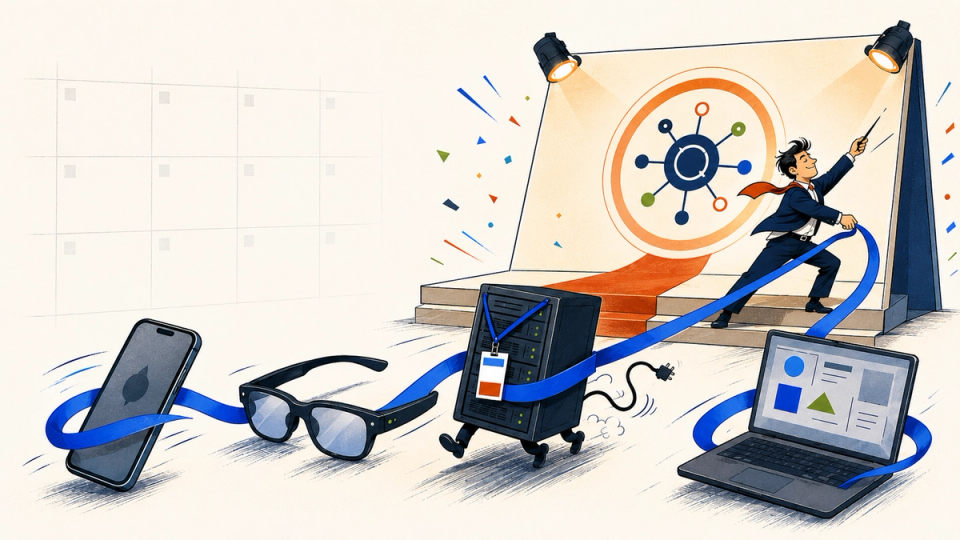
September 2026’s tech-event calendar begins with IFA in Berlin on September 4 and ends with OpenAI DevDay in San Francisco on September 29. In between, Apple, Salesforce, NVIDIA, Meta, and the rest of the industry will make their biggest announcements of the season.
The interesting part is not the number of launches. It is the way AI now connects events that used to belong to separate categories: phones, appliances, CRM software, chips, glasses, and developer APIs. September is the clearest test yet of whether AI has become useful infrastructure, or simply the label every product team puts in its keynote.
What is happening in September 2026?
The month has a dense run of major technology events, but they are not all making the same bet:
- IFA Berlin, September 4–8: Europe’s major consumer-electronics show is organized around smart homes, computing, robotics, and a dedicated “World of AI & Future of Tech” track. IFA’s official programme lists its opening press conference for September 2 and the public trade show for September 4–8.
- Apple Event, September 9: Apple has confirmed a special event at 10 a.m. Pacific. The company has not published a product list, so reports about specific iPhone or wearable models remain unconfirmed. Apple’s event page confirms the date and livestream.
- Dreamforce, September 15–17: Salesforce is framing its San Francisco conference around the “Agentic Enterprise,” with more than 1,600 sessions and hands-on work around Agentforce. Salesforce’s official FAQ confirms the dates and the event’s AI-powered agenda recommendations.
- AI Infra Summit, September 15–17: In Santa Clara, more than 8,000 engineers, architects, and executives are expected to focus on compute, networking, data centers, data movement, models, and physical AI. NVIDIA’s event page describes the summit as infrastructure for the era of agentic AI.
- Meta Connect, September 23–24: Meta’s developer event will cover VR, AI glasses, Horizon, and AI technologies. Meta’s developer page confirms the keynote and developer state of the union.
- OpenAI DevDay, September 29: OpenAI’s developer event in San Francisco will include technical sessions, API and tool workshops, demos, and a livestreamed keynote. OpenAI’s announcement confirms the date.
That is a calendar, not a prediction. Companies may change agendas, delay products, or use these stages for announcements that have nothing to do with AI. But the official language already shows where the center of gravity has moved.
Why does Apple’s September event matter to the AI story?
Apple’s event matters because it is the month’s biggest consumer test of whether AI can sell hardware. Apple has confirmed the September 9 date but has not disclosed the product slate. The meaningful signal will be which AI features are concrete, local, private, and available at launch, rather than how often Apple says “intelligence.”
Apple is arriving with something to prove. At WWDC in June, the company announced a rebuilt Siri AI powered partly by Google Gemini models, with Apple’s privacy architecture around the experience. That makes the September event less about adding another chatbot and more about whether Apple can turn model capability into a reason to upgrade an iPhone, buy a wearable, or use Siri instead of opening a separate app.
Our earlier coverage of Apple putting Google inside Siri explains why this is a strategic compromise, not a minor supplier choice. Apple can own the device, the operating system, and the privacy layer while sourcing some of the intelligence underneath.
That arrangement creates a simple decision rule for watching the keynote: ignore the model’s branding and look for the handoff. What can the device do without a network connection? What requires Apple’s Private Cloud Compute? What personal context can Siri actually use? And which features are available on existing hardware?
If Apple answers those questions clearly, September will show AI becoming a product capability. If it avoids them, “AI” will remain mostly a marketing wrapper around the annual hardware refresh.
Is IFA proof that AI has escaped the chatbot window?
Yes, but only partly. IFA places AI in appliances, laptops, smart homes, robotics, and on-device computing, which shows that AI is spreading into products people already buy. It does not prove those features are valuable. The useful test is whether they reduce friction, preserve privacy, and work reliably without demanding a new subscription for every appliance.
IFA is the month’s most revealing consumer event because it exposes the difference between AI as a feature and AI as a workflow. The official programme includes a “World of AI & Future of Tech” track, while its press material highlights personal AI, smart homes, and practical applications.
Tom’s Guide’s managing editor of core tech, Jason England, wrote that “AI will certainly be everywhere at IFA,” but also expected more practical use cases and stronger attention to privacy and on-device processing. That is the right tension. The question is no longer whether a product contains an AI feature. It is whether the feature earns the battery, compute, data access, and user trust it consumes.
The signal to watch is not the number of AI badges on the show floor. It is the number of products that can explain their data boundary in one sentence. A vacuum that maps a home locally is a different proposition from one that sends a detailed floor plan to a remote service. A laptop that summarizes documents on-device has a different risk profile from one that uploads a company’s entire working folder.
Our Google Gemini on-device AI coverage gives the broader context. September’s hardware announcements will show whether that architecture is becoming normal or remains a premium talking point.
Why are enterprise and infrastructure events happening at the same time?
Because enterprise AI has reached the expensive part. Dreamforce is selling the application and workflow layer, while AI Infra Summit is focused on the compute, networking, storage, energy, and data-center systems underneath it. Their overlap is a reminder that an agent is not a feature until a company can run it, govern it, and measure its cost.
Dreamforce and AI Infra Summit landing on the same dates is almost too neat. Salesforce will discuss agents acting inside business processes. NVIDIA and its partners will discuss the machinery that makes those agents possible at scale. One event asks what software workers can do. The other asks what the physical system must provide before those workers are economical.
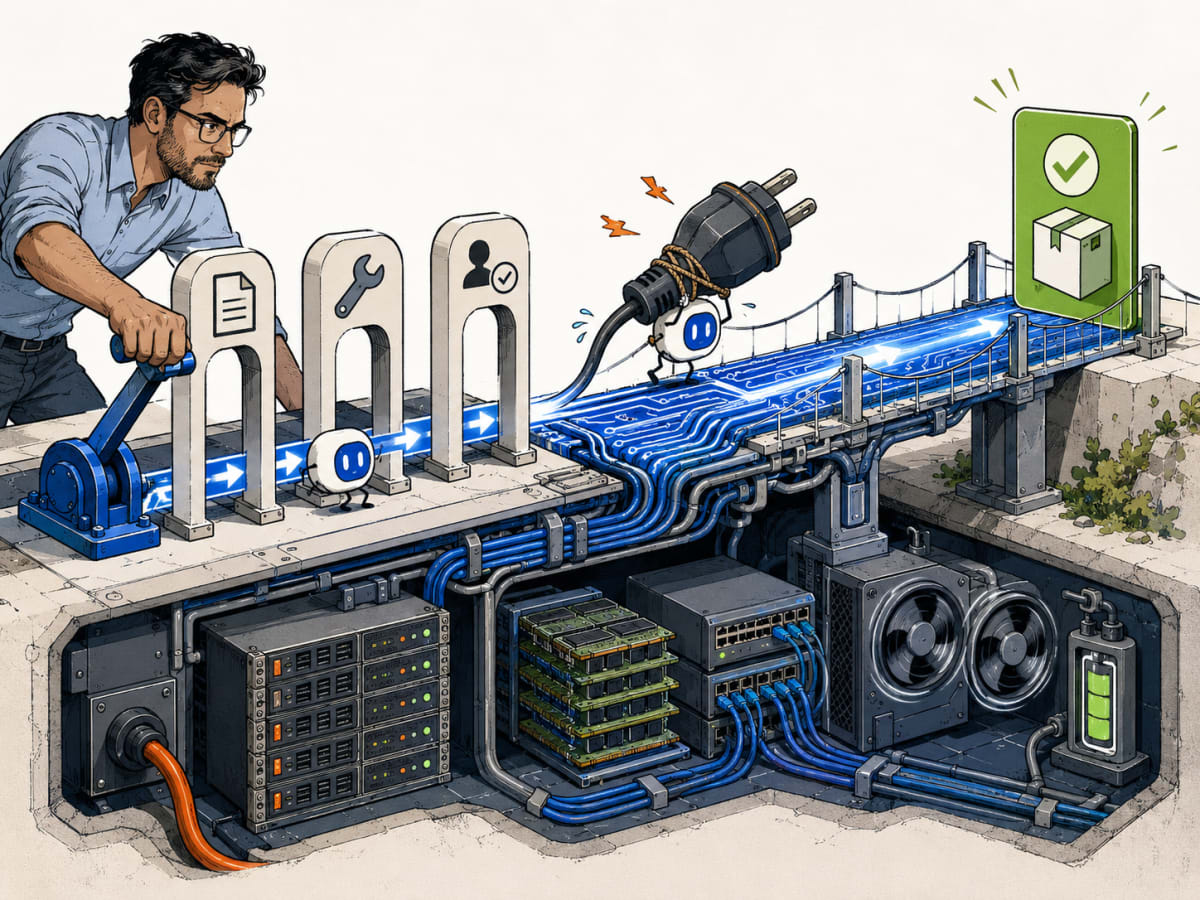
Salesforce lists more than 1,600 Dreamforce sessions, 150 hands-on trainings and demos, and 50-plus keynotes. AI Infra Summit lists more than 8,000 attendees, more than 400 speakers, and more than 250 exhibition partners. Those figures describe event scale, not product success, but they show how broadly the AI buildout now reaches.
The practical implication for engineering and operations teams is straightforward: do not evaluate an agent demo separately from its operating budget. Ask what data it reads, which tools it can call, how many retries it needs, who reviews its work, and what happens when a model or vendor changes. Our AI agent safety checklist is a useful pre-event worksheet for those questions.
The non-obvious story is that September may produce fewer “model launches” than people expect, yet still matter more. The industry is moving from model novelty to deployment friction. The winners will be the companies that make intelligence dependable inside an existing workflow.
What will Meta and OpenAI reveal about the next interface?
Meta and OpenAI represent opposite ends of the interface shift. Meta is taking AI toward glasses, mixed reality, and ambient interaction. OpenAI is taking it toward developer tools, APIs, and software that other companies can embed. Together, their September events test whether the next AI platform is something users wear or something developers build on.
Meta’s official developer page puts AI glasses beside Horizon and VR, which is a meaningful change from treating wearables as a separate hardware category. The useful questions are about capture, consent, latency, battery life, and what the assistant can do without sending a continuous stream of personal surroundings to a cloud model.
OpenAI DevDay is more explicit about the builder layer. OpenAI says the September 29 event will include technical sessions, API and tool work, hands-on demos, and a keynote that will be livestreamed. That makes the event important even for people who never attend: changes to tools, pricing, models, or platform limits can ripple through thousands of products.
Together, these events point to the same shift from answering prompts to managing context. Glasses collect context from the physical world. APIs let software act on context in digital systems. The hard problem is not producing a fluent response. It is deciding what the system is allowed to notice, remember, and change.
Who should pay attention this month?
Builders and indie developers should watch OpenAI DevDay and Meta Connect for platform changes, but avoid rewriting an application around a keynote demo. Wait for documentation, quotas, pricing, regional availability, and failure behavior. A feature is not production-ready because it appeared in a livestream.
Engineering and IT teams should watch the overlap between Dreamforce and AI Infra Summit. Treat every agent announcement as a systems question. Map the required data, tools, review steps, latency target, and completed-task cost before approving a pilot.
People buying laptops, phones, or smart-home devices should treat September as a chance to compare boundaries, not just benchmarks. Ask whether the AI runs locally, what is stored, what is sent to the cloud, and whether the feature works without a paid plan.
What to watch for next
Three signals will confirm whether September’s AI language reflects real product change.
First, Apple should show a specific chain from personal context to useful action, with a clear privacy boundary. Second, consumer-electronics companies should demonstrate features that survive ordinary use rather than staged demos. Third, enterprise and developer platforms should publish the operational details that keynote slides usually omit: pricing, limits, logs, permissions, and recovery behavior.
The month’s announcements will also reveal where the bottleneck has moved. If every company talks about inference cost, local processing, and data access, AI is becoming infrastructure. If every company talks about magic and says little about constraints, the industry is still selling aspiration.
The bottom line
September 2026 is full of tech events, but the calendar is not the story. The story is that AI has become the layer connecting product categories that used to be discussed separately.
Apple will test whether intelligence can sell a device. IFA will test whether it can improve everyday hardware. Dreamforce will test whether agents can move through business workflows. AI Infra Summit will test whether the economics can support them. Meta and OpenAI will test the next interface, through glasses and developer platforms.
The useful way to follow the month is to ask one question at every keynote: what can this system do, what does it need to know, and what happens when it is wrong? The companies with good answers will be building products. The rest will be decorating slides.
FAQ
When is Apple’s September 2026 event?
Apple’s official event page confirms a special event on September 9, 2026, at 10 a.m. Pacific. Apple has not published a complete product list on the event page, so specific hardware reports should be treated as unconfirmed until the keynote or an official newsroom announcement.
Which September 2026 tech event is most relevant to AI developers?
OpenAI DevDay on September 29 is the most directly relevant event for developers building with APIs and tools. Meta Connect on September 23–24 is more relevant to developers exploring AI glasses, VR, and ambient interfaces. Both events are expected to provide livestream or online viewing options, but the exact session access can vary.
Why does IFA matter for AI?
IFA matters because it shows whether AI is becoming useful in mainstream hardware, including laptops, appliances, smart-home products, and robotics. The show runs September 4–8, 2026, with media programming beginning earlier. The important evidence will be practical, privacy-aware features, not the number of products carrying an AI label.
Are Dreamforce and AI Infra Summit the same kind of event?
No. Dreamforce focuses on enterprise applications, customer workflows, Agentforce, and the skills needed to deploy business software. AI Infra Summit focuses on the physical and technical layers underneath AI, including compute, networking, data movement, models, and data centers. Their shared dates make the connection between those layers unusually visible.