
GPT-6 Astra Breakthroughs: A Record of Useful Work
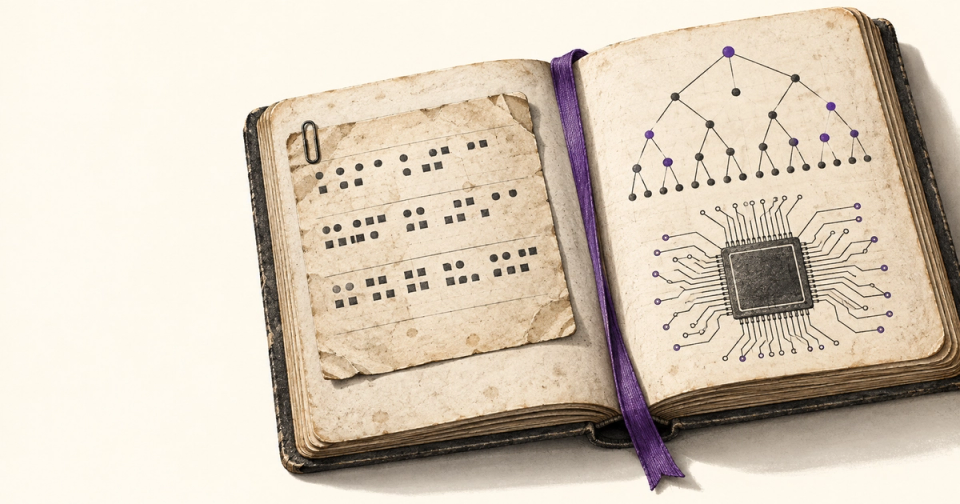
GPT-6 Astra has contributed to the recovery of World War I messages, new mathematical proofs, and a simulated semiconductor cooling design. This record collects seven reported contributions with their sources, the model's role, and the evidence available so far. The clearest benefit today is the addition of useful knowledge: historical material people can read and research that other people can inspect or extend.
That deserves a durable record. A recovered message can disappear beneath the next product launch. A mathematical result can become a vague claim that “AI solved maths,” losing the researchers, prior work, and verification that made it meaningful.
The point of keeping this record is to make progress legible. Each entry should tell you what became possible and give you somewhere to check it. Some achievements already have follow-up work from mathematicians. Others remain an author's report or a simulation. Those distinctions are part of the story.
The record so far
This is a selected review of public primary sources checked on September 21, 2026. It covers original experiment write-ups, research papers, and proof repositories. We have not independently rerun the decryption procedures, built the formal proofs, or reproduced the engineering simulations. Dates below identify public reports, rather than necessarily the day the work happened.
| Public report | Contribution | Evidence currently available |
|---|---|---|
| September 17 | RICHI-170: a German radio message from 1918 | Original account, with a published key and historical cross-check |
| September 19 | RICHI-240: reconstruction of a damaged 1918 message | Original account, including inferred missing characters |
| September 14–18 | A proof of the Erdős–Sós conjecture | Follow-up mathematics paper and research seminar |
| September 3 | A bound of 186 for infinitely recurring small prime gaps | OpenAI attribution and conditional Lean formalization |
| September 3 | An improved lower bound for large prime gaps | Research paper and formalization repository |
| September 12 | Golden-ratio growth in Conway's subprime closure | Author's paper, reporting algorithmic assistance and Lean verification |
| September 15 | A thermal-design contribution for stacked transistors | Engineering preprint, reporting simulation results and electrical trade-offs |
Recovering a message from 1918
On September 17, a writer publishing as prinz described Astra's recovery of RICHI-170, a German radio message dated November 27, 1918. The 170-symbol message used the ADFGVX cipher. Astra applied the keyword TRUPPENVERSCHIEBUNG, documented in an existing historical cryptography source. Original RICHI-170 account
The recovered text describes an English cruiser reaching Sevastopol, followed by an Allied squadron. A damaged or anomalous date character remains in the reported plaintext. The author says they were unaware of an earlier solution to this particular message; that is a narrower claim than proving nobody had ever read it. The key itself was already known. Method and plaintext
There is a satisfying historical cross-check. The transcribed HMS Canterbury logs record the cruiser securing in Sevastopol harbour on November 24, 1918, and an Allied squadron arriving on November 26. Those entries support the interpretation of the message. They do not, by themselves, establish priority for its decryption. HMS Canterbury's November logs
The contribution is useful historical recovery: connecting a surviving ciphertext, an old key, and an independent record. It adds an intelligible item to the archive. Calling this a defeat of modern encryption would describe a different achievement entirely.
Reconstructing a message with missing symbols
The second report, published September 19, concerns RICHI-240, dated November 11, 1918. Only 220 of its original 240 symbols survived. According to prinz, Astra tried published keys alongside possible positions for the missing symbols, assessing the resulting text for German language patterns. Original RICHI-240 account
The proposed reading concerns German military formations and locations. Some unit numbers remained ambiguous after the cryptographic work. The write-up reports resolving them with a contemporary French intelligence telegram. That makes this an assisted reconstruction using historical evidence, with some characters inferred rather than recovered uniquely from the surviving ciphertext. Reconstruction and supporting references
This entry has a different kind of value from the first. It demonstrates a way to work with incomplete records. The useful artifact would preserve both the readable reconstruction and the uncertainty underneath it, so a future historian can distinguish surviving evidence from supplied interpretation.
For this record, the status is a documented reconstruction claim. An independent cryptanalyst's reproduction would strengthen it. A correction to one inferred number would also belong here, alongside the original result.
A mathematical proof that researchers are building on
The Erdős–Sós result is among the strongest entries because researchers have published work explaining and extending the argument attributed to Astra.
The conjecture concerns graphs, mathematical structures made of vertices joined by edges. It says that a graph with average degree greater than t − 2 contains every tree on t vertices. A tree is a connected graph without cycles. David R. Wood's September 15 exposition traces the conjecture to 1963 and attributes the proof to GPT-6 Astra, reporting formal verification in Lean. Wood's exposition
Oliver Riordan and Alex Scott describe Astra's approach as a “very ingenious and surprising argument.” Their paper, first submitted September 14 and revised September 16, presents a simplified version and additional results. This is concrete evidence that mathematicians can take an AI-attributed argument and use it for further work. Riordan and Scott's paper
On September 18, Wood also presented the proof at the Institute for Basic Science's Discrete Math Seminar. Seminar record
The benefit here is a mathematical contribution entering public research. It does not need a speculative claim about an immediate commercial application to matter. A proof can be valuable because it settles a question and gives other researchers a technique they can reuse.
Progress on how closely primes recur
OpenAI's September 3 launch material credits Astra with helping establish that infinitely many pairs of primes occur within a distance of 186. In plain language, however far along the number line you go, sufficiently close prime pairs keep recurring. It does not say all neighbouring primes are at most 186 apart. OpenAI's prime-gap account
The verification detail deserves to travel with the headline. The PrimeGaps186 repository says its Lean results are conditional on three explicit input axioms. The underlying mathematical estimates and numerical bounds have not all been proved inside that Lean development. Its separate Python certificate does not remove those assumptions. PrimeGaps186 verification scope
That is a precise, reviewable research artifact. It also gives us a useful wording rule: describe this as a reported prime-gap advance with a conditional formalization. “Fully machine-verified from end to end” would overstate what the repository says.
For anyone collecting GPT-6 Astra breakthroughs, preserving that distinction makes the record more useful to a mathematician who wants to inspect the result.
Progress on how far apart primes can be
Large prime gaps ask the complementary question: how long can stretches without primes become?
OpenAI's paper Improved long gaps between primes presents a stronger lower bound on the largest gap below a sufficiently large number. Its abstract states: “The proof is due to GPT 6 Astra.” The paper also discusses earlier work by human mathematicians and a preceding argument attributed to GPT-5.6 Sol. Long-gap research paper
The accompanying repository includes a Lean formalization, build instructions, and instructions for independent proof checking. We have inspected the published description, not executed those checks. LongGapsBetweenPrimes repository
Small-gap and large-gap advances can coexist: primes can have infinitely recurring close neighbours while also leaving increasingly large empty stretches. Keeping them as separate entries avoids compressing two different mathematical questions into a single vague “prime numbers breakthrough.”
It also preserves the continuity of research. Astra's contribution belongs beside the work it builds upon. Readers should be able to follow that chain through the paper's references.
Helping prove a golden-ratio growth result
Romain Popescu's September 12 paper studies Conway's subprime closure, a sequence of sets built by repeatedly applying a number-theoretic operation. It proves a conjecture that the ratio of successive set sizes approaches the golden ratio. Popescu's paper
The author's attribution is specific: the proof was constructed with “some algorithmic assistance from GPT-6 Astra,” and its correctness was formally verified using Lean 4. That wording credits a contribution within a human research project. It does not attribute the entire project to the model. Contribution statement
This is worth keeping even though it is less immediately recognisable than a wartime cipher. A useful history of AI-assisted discovery should include narrow results with clear attribution. Otherwise, the record will overrepresent spectacular headlines and underrepresent the smaller contributions through which research accumulates.
Testing a cooler transistor design
The September 15 preprint by Min-Hui Kim, Khushi Sharma, Sarah Zhang, and Ye Wang examines thermal design for 2D complementary field-effect transistor inverters. These are semiconductor structures where electrical performance and heat removal must be considered together. The work uses a supplied electrothermal model. Thermal-design preprint
At the 12-nanometre scale, Astra selected a redistributed source-interconnect geometry; a coordinating agent proposed a substrate-directed heat-removal path. The combined design reduced peak temperature rise by 1.67 kelvin at fixed metal volume and 20 microwatts in the model. The combined result therefore should not be credited to Astra alone. Reported design contributions
A later sensitivity analysis found roughly 0.6 kelvin of cooling alongside a 2% loss in nFET on-current. The electrical cost matters: a cooler design can still sacrifice performance. This is a simulation study, not evidence that manufactured chips or deployed data centres already enjoy those gains. Results and trade-offs
The useful contribution is a candidate design tested against constraints, with its downside recorded. A subsequent physical experiment would be a separate milestone to add.
What these contributions have in common
Our reading of these cases is that Astra's useful work often sits between an existing body of knowledge and a checkable artifact. The artifact may be a reconstructed message, a proof, or a design result. Its value becomes easier to assess when another person can inspect the path to it.
That suggests a practical opportunity for builders and researchers. Look for work where progress leaves something testable behind. Define the check before starting: a source document, a reproducible calculation, or an experiment with fixed constraints. Keep the model's contribution identifiable within the surrounding workflow.
Our earlier assessment of GPT-6 Astra's computer use after launch examines the supervision side of this question. The research cases here provide a different measure: whether the work produces knowledge someone else can use.
The same standard should apply across vendors. Our coverage of Claude Fable 5's reported breakthroughs offers a related set of claims to examine. The comparison becomes meaningful when we preserve contribution and verification details for each model.
Keep the record useful as it grows
Use the following fields for each new entry. They fit in a spreadsheet, a research notebook, or the notes attached to an article.
| Field | What to record |
|---|---|
| Date and original source | The first report you can locate, with a durable link |
| Problem and result | What was attempted and what the output establishes |
| Model contribution | The exact model and the work attributed to it |
| Human and tool contributions | Problem selection, prior methods, code, review, and other agents |
| Verification | Who checked it, what they checked, and any remaining assumptions |
| Observed benefit | A recovered record, usable proof, measured improvement, or deployed outcome |
| Corrections | What changed, when, and why |
Update an entry when its evidence changes. A preprint can acquire independent support. A reconstructed character can be corrected. A proposed design can fail a physical test. Keeping those changes visible gives the next reader a more accurate history.
For everyday business work, the same habit applies at a smaller scale. Record whether an AI-assisted process improved the completed task, including the review it required. Our Jev model analysis and AI progress report applies that approach to bounded decisions inside software.
What this record cannot establish yet
These seven entries do not measure Astra's total effect on the world. They are a selected set of public reports, concentrated in domains where people can publish compact evidence. They reveal little about routine benefits that never become papers or posts, and they cannot establish an overall success rate without the failed attempts.
The evidence also supports different levels of confidence. Mathematical follow-up work is stronger support than a single experimenter's announcement. Reported formal verification still requires attention to the statement and assumptions being checked. A simulation describes behaviour inside a model of a physical system.
This article is an AI-assisted synthesis of linked public sources, prepared for human editorial review. It reports the authors' findings and distinguishes them from our interpretation; it is not an independent certification of every result.
There is already useful work worth remembering. A century-old message can be read. Researchers have new arguments to examine and extend. Engineers have a design proposal with a quantified trade-off. Keeping a careful record lets those contributions retain their value after the launch-day attention moves on.