
Adobe Buys Topaz Labs: The Real Bet Is Local Inference
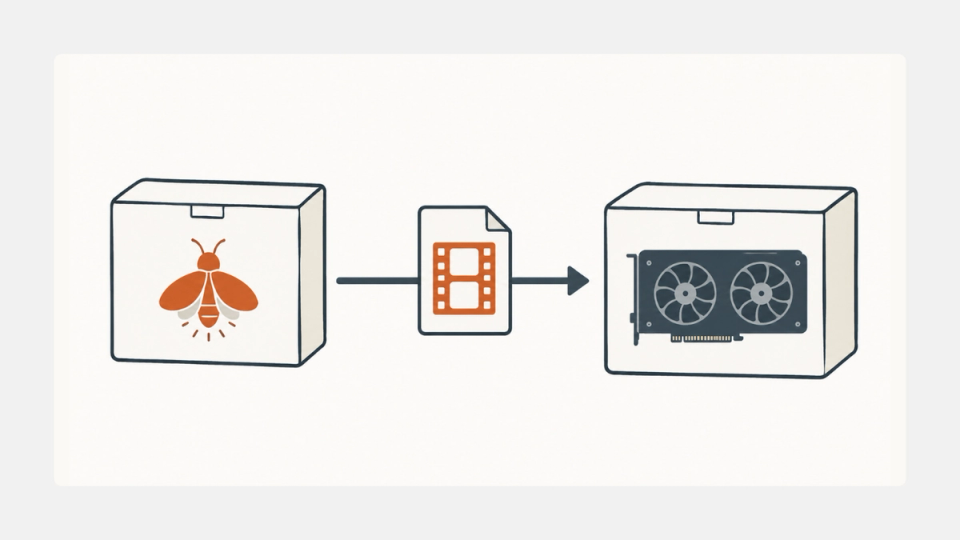
Adobe announced its acquisition of Topaz Labs on June 25, 2026, pulling the leading AI-powered photo and video enhancement suite into its Creative Cloud ecosystem. The deal brings Topaz's proprietary Neurostream technology and its highly profitable pro-sumer user base into Adobe's fold. While the headlines focus on Adobe matching Google and OpenAI in video capabilities, the real story is latency. Adobe just bought the fastest local inference engine for media upscaling on the market.
What Happened
Adobe entered a definitive agreement to acquire Topaz Labs for an undisclosed sum. The transaction is expected to close in the second half of 2026, subject to regulatory approval, with Topaz CEO Eric Yang continuing to lead his team.
The deal brings Topaz's specialized AI models—including Gigapixel AI, DeNoise AI, and Video AI—into Adobe's ecosystem. According to the announcement, these capabilities will integrate into Adobe Firefly and Creative Cloud flagship applications like Premiere Pro and Lightroom. Unlike Firefly, which is heavily cloud-dependent, Topaz relies on Neurostream, a proprietary optimization technology that runs complex AI models locally on consumer GPUs and Apple Silicon.
Why Adobe Actually Bought Topaz

Does Adobe really need more video tools?
Adobe already has Firefly Services for video generation, but generation and enhancement are fundamentally different workloads. Firefly is a cloud-first pipeline. When an editor is upscaling 4K archival footage or running noise reduction on a two-hour documentary, round-tripping terabytes of data to the cloud is a non-starter.
As Google's AI Image and Video Tools: What Actually Changed demonstrated earlier this year, the cloud generation war is fierce, but local processing is where professional workflows actually live. Topaz solved local inference for heavy media workloads years ago, turning an hours-long cloud render into a real-time local task.
What is the Neurostream advantage?
Neurostream is the engine that optimizes Topaz's models to run natively on local hardware without melting the machine. This acquisition reflects a broader industry shift toward moving compute to the edge. Just as Ideogram Opens the Vault: 4.0 Is Free to Run made waves by prioritizing local execution, Adobe realizes that the future of pro video requires leveraging the GPU already sitting on the editor's desk.
While hyperscalers dump billions into server infrastructure—as seen in Meta's $145B Spend Only Makes Sense If You Believe in Robots—Adobe is optimizing for latency. They gain a turnkey local inference engine that can immediately plug into Premiere Pro's rendering pipeline.
Who This Affects
Premiere Pro Editors: Expect native, hardware-accelerated upscaling and sharpening tools inside Premiere that do not require an active internet connection or a Firefly credit balance. This closes the gap with DaVinci Resolve, which has built a strong lead in local Neural Engine tools.
Current Topaz Users: Topaz currently sells perpetual licenses with paid upgrade cycles—a model diametrically opposed to Adobe's Creative Cloud subscriptions. Adobe's history with acquisitions suggests standalone apps will survive the transition period before their core technologies are completely absorbed into the subscription model.
What To Watch For Next
The true signal of this acquisition's success will be the integration timeline. Watch to see whether Adobe brings Neurostream into After Effects and Premiere natively before the end of 2026, or if it gates the new capabilities behind a higher-tier Firefly "Pro" subscription. The speed at which Adobe ports its own Firefly models to run locally via Neurostream will reveal their long-term edge strategy.
The Bottom Line
Adobe's acquisition of Topaz Labs is less about acquiring generative AI capabilities and entirely about owning the local processing pipeline for professional media. In a market obsessed with cloud compute, Adobe just placed a massive bet on the edge.