
Google's AI Image and Video Tools: What Actually Changed
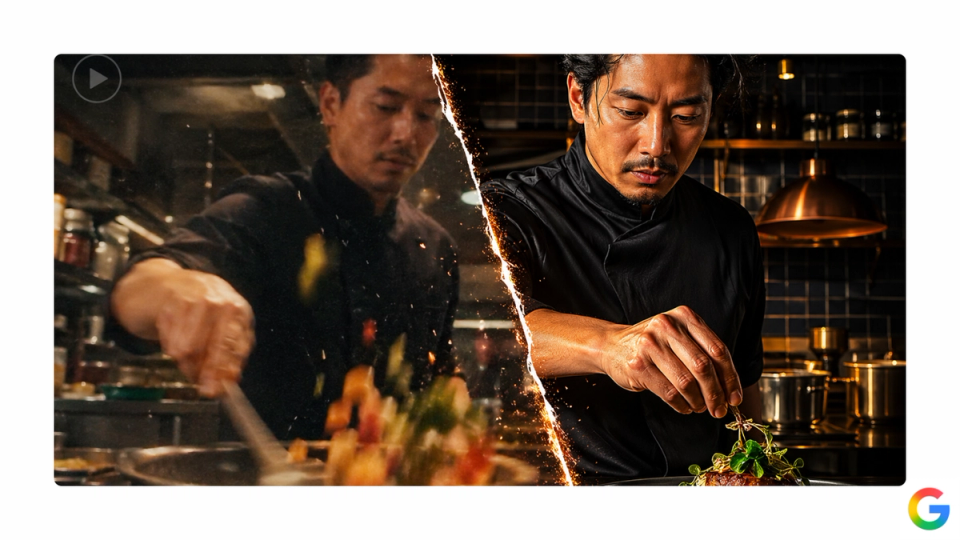
A year ago, most creative professionals laughed off Google's image and video generation tools as technically impressive but practically useless. That changed. Here is an honest account of where Veo 3 and Imagen 4 actually stand, what is coming next, and who should actually care.
The AI image and video generation space in 2026 has a simple problem: everyone is making announcements, almost nobody is making things people actually use to ship real work. Runway has the film community. Midjourney has the designers. OpenAI's Sora has the hype. And Google, for most of the past two years, has had the benchmarks without the audience.
That is starting to change, and Google I/O on May 19 is where we will find out how much.
What Google Actually Ships Right Now
Before predictions, the current state.
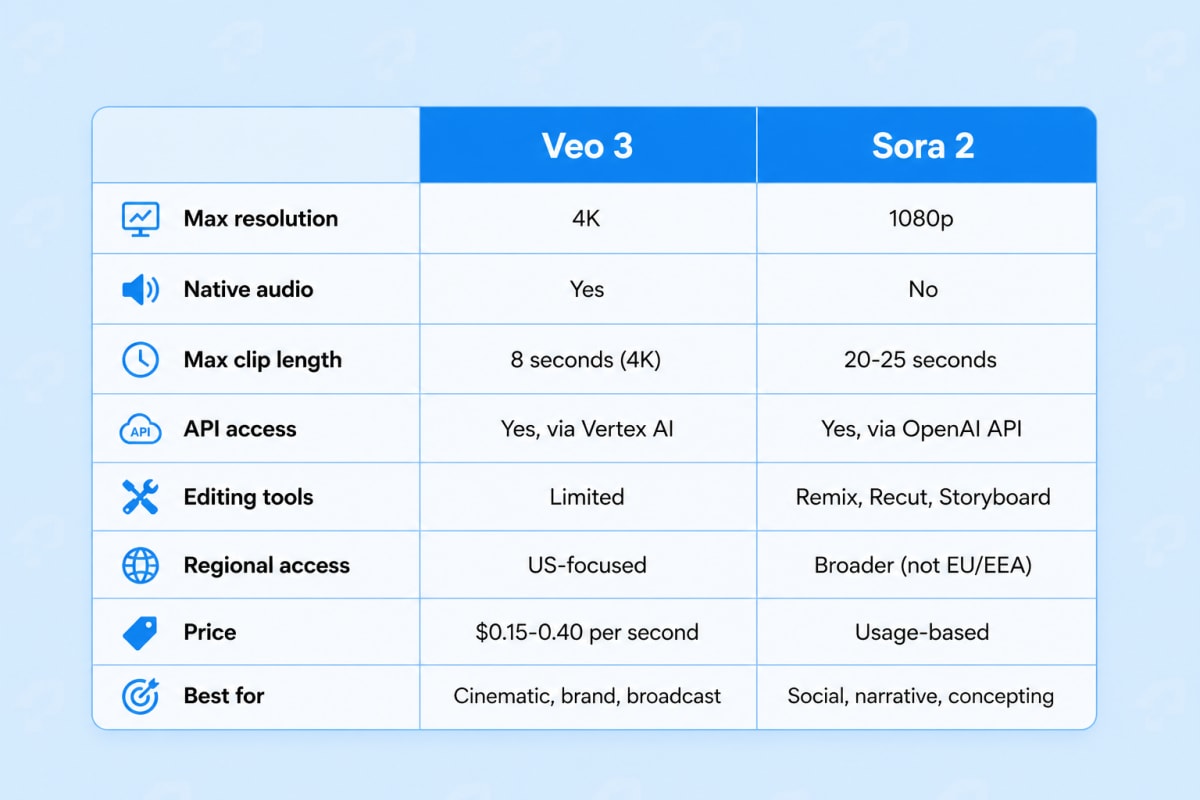
Veo 3 was announced at Google I/O 2025 and represents a genuine step forward from anything Google has shipped in video generation before. It produces 4K footage with synchronized audio including ambient sounds, dialogue, and background music, all generated from a single text prompt. That last part is the actual differentiator. No other major model at this tier generates native audio. OpenAI's Sora 2 still requires you to add audio in post-production.
The catch: Veo 3 is available through the Google Flow platform, currently US-only, with limited regional access elsewhere. Getting API access costs $0.15 to $0.40 per second of generated video depending on resolution. For enterprise use via Vertex AI it is production-ready. For individual creators, the pricing and access restrictions have been a genuine barrier.
Imagen 4 is Google's text-to-image model, embedded across Workspace tools, Google Slides, and Gemini. It does not get as much standalone coverage as Veo, but it is the model that most people have actually touched via Workspace integration. Resolution and detail have improved significantly from earlier versions, and prompt adherence is now reliable enough for professional brand work.
Veo 3 vs Sora 2: The Honest Comparison
These are the two models that matter at the frontier right now. Here is how they actually differ.
Where Veo 3 wins: Veo 3 produces 4K output. Sora 2 maxes at 1080p. For broadcast, cinema, or premium brand work that goes on a large screen, Veo 3 is the only realistic option. It also has native audio generation, explicit camera controls (dolly, pan, tilt specified directly in the prompt), and a production API via Google AI Studio that enterprises can integrate into automated workflows. For production applications requiring programmatic video generation, Veo 3 is currently the only enterprise-ready option at this tier.
Where Sora 2 wins: Sora 2 can generate up to 20 to 25 seconds of continuous video, significantly more than Veo 3's 8-second 4K clips. It has a built-in editing suite including Remix, Recut, Blend, Loop, and Storyboard for scene-level adjustments without leaving the tool. And it handles stylized, abstract, and imaginative prompts better. For social content, campaign concepting, and short-form narrative work, Sora 2's creative range gives it an edge. Many marketing teams in 2026 use both, prototyping with Sora and finalizing hero shots with Veo 3.
Neither is going to win the AI video war in absolute terms. They reflect their organizations' different cultures. Google's scientific rigor shows in Veo 3. OpenAI's creative-first approach shows in Sora 2.
What to Expect from Google I/O on May 19
Google has confirmed that updates to Veo and Imagen are on the agenda. Sundar Pichai's pre-event posts specifically named Veo 3 updates and Imagen 4 among expected announcements. Here is what actually makes sense to expect.
Veo 3 updates: longer clips and wider access
The 8-second maximum for 4K clips is the most cited limitation in creator feedback. Sora 2 generating 20-plus seconds at 1080p makes the comparison unflattering. Expect Google to either push the duration limit up, introduce a lower-resolution longer-form mode, or both. Wider geographic availability is also overdue given the US-only rollout so far.
Imagen 4 and deeper Workspace integration
The more important announcement for most working professionals is not a standalone Imagen 4 upgrade but how tightly it integrates into Slides, Docs, and Gmail. If Google demonstrates end-to-end video creation inside a Google Slides deck at the keynote, that is the moment when image and video generation stops being a separate tool and starts being part of the existing workflow for hundreds of millions of people. That is a bigger deal than any benchmark improvement.
Veo inside YouTube creation tools
This one has been rumored and makes logical sense. YouTube is the world's largest video platform and Google owns it. Embedding Veo generation directly into YouTube Studio would give creators a tool with no comparison in the market. B-roll generation, intro sequences, thumbnail animation. If this is announced at I/O it will get more attention than the technical specs of the underlying model.
The Access Problem That Nobody Wants to Talk About
Here is the part that gets left out of most coverage. Both Veo 3 and Sora 2 are meaningfully good. Both are also genuinely inaccessible for most creators without either a significant budget or a waitlist.
Veo 3 professional use requires a Gemini Ultra subscription at $19.99 per month or pay-per-use API access. For enterprise video production that is a rounding error. For an independent creator experimenting, the per-second pricing adds up quickly. And the regional restrictions mean large parts of the world cannot access it at all.
OpenAI's Sora 2 has its own access issues in the EU and EEA. The frontier models are impressive but they are not broadly democratized yet.
This is why Seedance and Kling AI have quietly built real audiences in 2026. They are not as capable as Veo 3 or Sora 2 at the top end, but they are accessible today, with commercial rights, without a waitlist. Google and OpenAI are competing for the professional tier. The question of who serves the wider creator market is still open.
My Read: Where This Actually Goes
The image and video generation space in 2026 is not a two-horse race between Google and OpenAI. It is a market with multiple tiers serving different audiences, and the frontier tools are not yet winning on accessibility.
What Google does have is the distribution advantage it has everywhere else. If Imagen 4 becomes the default image generator in Google Workspace, hundreds of millions of people use it without consciously choosing to. If Veo generation appears inside YouTube Studio, the adoption numbers dwarf anything Runway or OpenAI can reach through their standalone products. Google does not need to win on creative range or model benchmarks. It needs to be the tool that is already there.
"The creative professional who uses Midjourney, Runway, and Sora will keep using those tools. The person who lives in Google Docs and has never opened a standalone AI tool is the audience Google is actually building toward."
That is a massive audience. And if I/O on May 19 delivers a Workspace-native image and video generation experience that works without switching tabs, Google's image gen story changes overnight regardless of what the benchmark comparisons say.
The creative tools race is not about who makes the best video from a prompt in a vacuum. It is about who makes video generation feel like part of the work you are already doing. Google is closer to that than any of its coverage suggests.