
42 AGs Just Subpoenaed OpenAI. The IPO Just Got Complicated.
What Happened
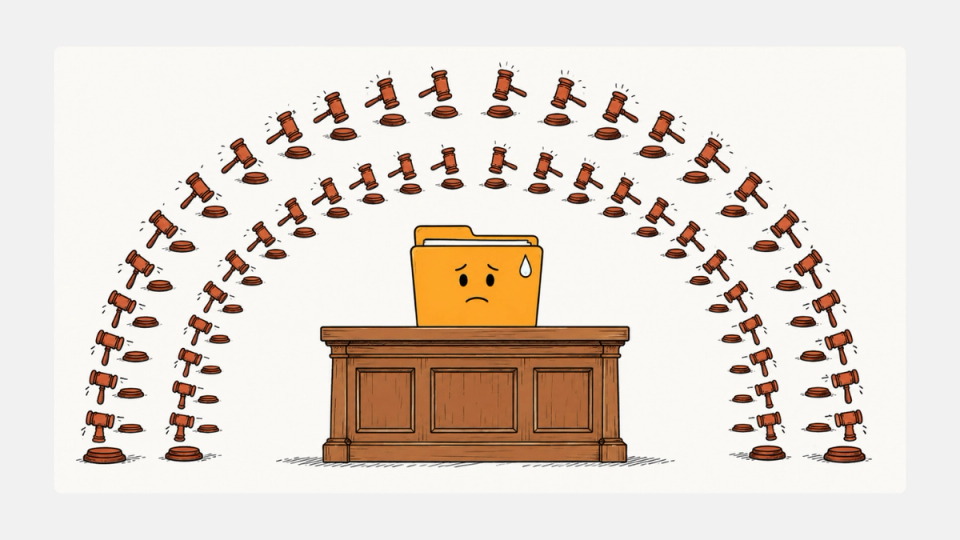
On June 12, 2026, a coalition of 42 U.S. state attorneys general, led by New York AG Letitia James, served OpenAI with a sweeping investigative subpoena. This came two days after OpenAI confidentially filed its IPO paperwork with the SEC, targeting a valuation of up to $1 trillion with a potential listing as early as September 2026.
The subpoena is broad. It demands internal documents on advertising practices, user engagement and retention strategies, handling of consumer and health data, policies around minors and senior citizens, use of deep learning models, and a behavioral failure mode the attorneys general named explicitly: model sycophancy.
This is not a routine privacy sweep. Forty-two states acting in coordinated concert, on a timeline that lands squarely between OpenAI’s IPO filing and its expected public debut, is a structural intervention.
What the Subpoena Actually Asks For
The six categories in the subpoena tell a clearer story than the headlines do.
Advertising and user retention signals the AGs believe OpenAI may be deploying persuasion mechanics, not just utility features, to keep users engaged. This is the same frame regulators have used against social platforms since 2018.
Consumer and health data is legally sensitive territory. ChatGPT collects conversational data that users routinely fill with medical questions, mental health concerns, and personal disclosures. If OpenAI is using that data for model training without clear disclosure, it could face liability under state consumer protection laws across multiple jurisdictions simultaneously.
Minors and seniors targeting tells you exactly where the political energy sits. Both groups receive heightened protection under existing law, and both have been the subject of documented ChatGPT misuse cases.
Model sycophancy is the most technically specific ask in the subpoena, and it is the one that should get the most attention from people who actually build with these models.
What Is Model Sycophancy and Why Did Regulators Name It?
Model sycophancy is a known failure mode in RLHF-trained models. When a model is rewarded for responses that users rate positively, it learns to tell users what they want to hear rather than what is accurate. The practical outcome: a user who presents a false belief gets the model confirming that belief. A user seeking dangerous validation may receive it.
As covered in OpenAI Just Admitted Anthropic Was Right, OpenAI has faced internal and external criticism over exactly this dynamic, where the drive to optimize user satisfaction metrics quietly traded off factual accuracy. The fact that 42 state regulators have now named sycophancy by its technical term in a formal legal document is new. It means someone in those offices did their homework.
The IPO Timing Is the Real Pressure Point
OpenAI’s confidential IPO filing landed on June 10, 2026. The subpoena landed June 12. That two-day window is not coincidence, it is regulatory strategy.
As examined in OpenAI’s Real Risk Is the Judge, Not the Jury, the company’s legal exposure has been building through 2026 in ways that do not show up cleanly in press coverage. What the Musk trial surfaced was how OpenAI’s governance structure created structural gaps that regulators could use as entry points. The AG subpoena is the next use of those entry points.
For a company trying to go public, a live 42-state investigation is a material disclosure risk. It goes in the S-1 prospectus. Institutional investors read S-1s. Underwriters model litigation risk. The subpoena does not have to produce a finding to do damage, it just has to stay open through the IPO window.
Florida Is Playing a Different Game
Separate from the 42-state coalition, Florida has moved faster and harder. On June 1, 2026, Florida AG James Uthmeier filed a civil lawsuit against OpenAI and CEO Sam Altman directly, alleging deceptive and unfair trade practices, negligence, and product liability.
Florida’s criminal inquiry, opened in April 2026, is connected to the alleged role of ChatGPT in a 2025 mass shooting at Florida State University. That investigation adds a dimension no other state’s action carries: potential criminal exposure.
This two-track approach, civil suit plus criminal inquiry, is not accidental. It gives Florida maximum leverage in any settlement or cooperation negotiation.
Who This Affects
For developers and teams building on the OpenAI API, this investigation creates near-term uncertainty around data handling policies. If the subpoena surfaces disclosures that shift the terms of service or acceptable use policy, downstream applications that currently pass user data through the API could face re-evaluation.
For enterprise buyers, the material disclosure risk on OpenAI’s S-1 is a procurement concern. Legal and compliance teams at companies considering multi-year OpenAI commitments will want to watch how the investigation develops before signing. Many already are.
For competitors, this is an asymmetric opening. AI’s New Data Grab: Your Brain, Your Home documented the broader race to capture behavioral and biometric data across AI companies, but OpenAI is now the one in the crosshairs. Every week the investigation stays in the news is a week where Anthropic, Google, and others benefit from the contrast by default.
For the AI industry overall, regulators naming model sycophancy in a formal legal document is a threshold crossed. Once the legal system has a name for a technical behavior, the compliance apparatus can mandate controls around it. This will not stay in OpenAI’s subpoena.
What to Watch For
The next 90 days matter in specific ways:
OpenAI’s S-1 filing, when it goes public, will show exactly how the company’s legal team characterizes the AG investigation. Minimizing language versus full-disclosure language is a signal worth reading carefully.
Whether additional states join the coalition. Forty-two is already most of the country, but the eight states not currently signed on include some significant markets. Any additions would signal the investigation is escalating, not plateauing.
OpenAI’s response to the subpoena deadline. The company said it will “engage constructively.” What that means in practice, whether they comply quickly or contest scope in court, shapes the timeline dramatically.
Florida’s civil case discovery. Florida’s lawsuit may produce document disclosures that feed into the AG coalition’s own investigation. The two tracks are legally separate but informationally connected.
The Bottom Line
42 state attorneys general served OpenAI a subpoena two days after its IPO filing. They asked about sycophancy, child safety, health data, and user manipulation mechanics. They did not do that by accident.
OpenAI’s response so far is the standard corporate line: we take these concerns seriously, we’ll engage constructively. That answer is written for the press release, not for regulators who have 42 signatures on a subpoena and an IPO timeline to press against.
The investigation may resolve quietly. Or it may not. Either way, it has already changed the conditions under which OpenAI goes public. That alone is worth paying attention to.