
Gemini 3.8 Flash Is a Model-Cadence Test

Google introduced Gemini 3.8 Flash and Gemini 3.8 Flash Cyber on September 2, 2026. The general-purpose model is Google’s most capable Flash workhorse yet, with a 1,048,576-token input limit, 65,536-token output limit, and introductory API pricing of $0.75 per million input tokens and $3.75 per million output tokens.
The interesting part is not just the new model. Google has now shipped three Flash releases in six weeks, each aimed at a different production constraint. That turns Gemini 3.8 into a test of whether teams can evaluate model upgrades as changes to a live system, rather than as leaderboard events.
For builders, the right question is not “Is 3.8 smarter?” It is “Does this version finish my real tasks more reliably without breaking my budget, latency target, or safety boundary?”
What Happened
Google says Gemini 3.8 Flash is its best reasoning and coding model so far, while keeping the same speed and low cost as Gemini 3.7 Flash. The company positions it for long-horizon software engineering, autonomous agents, and complex enterprise workflows.
The API model is generally available as gemini-3.8-flash through Google AI Studio and the Gemini API. It is also available through Google Antigravity, Android Studio, Gemini Enterprise Agent Platform, Gemini in Google Search’s AI Mode, and the Gemini app for Google AI Pro and Ultra subscribers. The model accepts text, images, video, audio, and PDFs; supports function calling, code execution, file search, structured outputs, URL context, search grounding, and computer use in preview.
The price is introductory. Through December 31, 2026, Google lists $0.75 per million input tokens and $3.75 per million output tokens. From January 1, 2027, those prices are scheduled to rise to $1.50 and $7.50 respectively. That is not a minor footnote for teams writing a routing policy: a model can be cheap during evaluation and materially less cheap after the evaluation period ends.
Google launched a second model alongside it: Gemini 3.8 Flash Cyber. It is tuned for vulnerability detection and automated patching and is available to trusted defenders through the new Fairwind Program. That separation matters. Google is not treating cyber capability as merely another setting that every developer should turn on; it is putting a narrower access boundary around a more permissive security model.
The release also follows an unusually tight cadence. Google describes 3.8 as its third Flash release in six weeks, following Gemini 3.7 Flash three weeks earlier. The Gemini 3.7 Flash agent-economics analysis already made the important buying point: token price is only the starting line. Retries, tool calls, review time, and failed side effects decide what an agent actually costs.
Does Gemini 3.8 Flash change the model choice for builders?
Yes, but mainly for teams with long-running agent tasks and a measurable production bottleneck. Gemini 3.8 Flash is worth testing when coding, tool use, or sustained reasoning is limiting throughput. It is not automatically the right replacement for every task just because it is the newest Flash model.
The release is best understood as an attempt to make the mid-tier workhorse more capable without moving it into a premium-model cost bracket. Google says 3.8 delivers substantial gains over 3.7 Flash in software engineering, agentic tasks, and multi-step reasoning while preserving the same introductory rate card.
That is a useful proposition. A production team often needs hundreds or thousands of bounded decisions, not one spectacular answer. If a model can keep a coding agent on track for longer, recover from tool failures, and produce fewer review corrections, the quality improvement can matter more than a benchmark rank.
But “same speed” is not the same as “same workflow cost.” Higher effort levels can use more tokens. Long-running agents can call tools repeatedly. Computer use is still marked preview in the API documentation. A model that looks inexpensive per token can still be expensive per accepted change when its loop is poorly bounded.
The Gemini 3.6 Flash agent-cost analysis is the useful precedent here. It frames model selection around cost per completed agent task, not the rate card alone. Gemini 3.8 raises the value of that method because the release itself is likely to change the baseline teams are comparing against every few weeks.
Is Google’s rapid Flash cadence good for production teams?
It is good for capability progress and bad for casual evaluation. Three Flash releases in six weeks give teams more opportunities to improve throughput, but they also create version drift, moving benchmarks, and migration work that a monthly invoice will not show.
The benefit is obvious: teams do not have to wait for a once-a-year flagship release to get better coding or agent behavior. The risk is subtler. If the default model changes while prompts, tool schemas, and acceptance checks stay fixed, a workflow can improve, regress, or simply change its failure pattern without an obvious code diff.
This is why the cadence should be treated like a dependency-management problem. Pin the model version where consistency matters. Run a fixed regression set before changing the default. Keep examples of successful and failed tool calls. Record output tokens, latency, retries, human corrections, and side effects. Then decide whether the new model is an upgrade for the workflow, not whether the model card sounds more impressive.
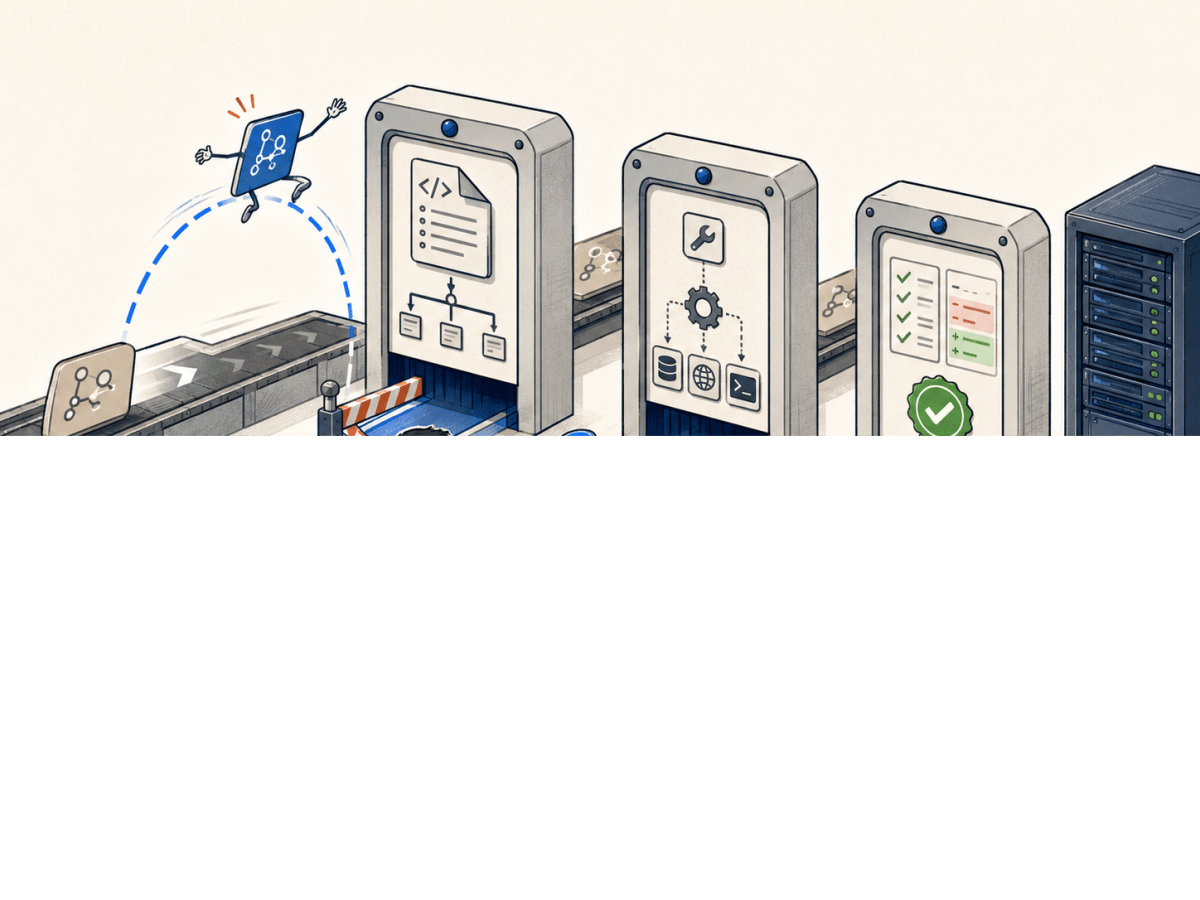
The same logic appears in the AI coding model ranking by use case: the best model depends on the failure a workflow can afford. Gemini 3.8 may be the better choice for long-running, high-volume agent loops. A stronger or more stable model may remain the better choice for an ambiguous migration, a production incident, or a change that touches money or permissions.
What do Google’s performance claims actually establish?
They establish a strong product direction, not a universal winner. Google reports improvements across coding, agentic workflows, and complex knowledge tasks, while its model page says Glean completed more than three times as many tasks in its evaluations compared with Gemini 3.7 Flash. Those claims still need workload-specific replication.
That distinction matters because the public evidence is uneven. The API documentation clearly states the context limit, output limit, capabilities, and stable model identifier. The launch announcement describes the quality gains. But a team choosing between models still needs to know how the candidate behaves on its own repositories, tools, permissions, and review process.
The practical artifact is a task set, not a screenshot of a benchmark chart. Include a small feature, a bug reproduction, a multi-file refactor, test generation, a long-document extraction task, a tool-use workflow, and one deliberately ambiguous request. Score first-pass success, completed end state, retries, unrelated edits, token use, wall-clock latency, and human correction time.
Then rerun the set after the December price change. A two-stage evaluation catches two different risks: capability regression and economic regression. The model may improve enough to justify higher pricing, or it may not. You need the data before the price change makes the decision for you.
Who This Affects
For software teams, Gemini 3.8 is a sensible candidate for bounded repo work, issue triage, test scaffolding, documentation changes, and agents that must operate across several tool calls. Start in a sandbox. Require tests and diff review. Escalate after repeated retries, scope drift, or any unexplained change outside the requested files.
For startups, the pricing window creates a planning trap. The introductory $0.75/$3.75 rate is useful for discovery, but a serious forecast should model the scheduled $1.50/$7.50 rate from January 2027. If the workflow only works economically at launch pricing, it is a promotion-dependent architecture, not a durable one.
For enterprise buyers, the model’s distribution footprint is attractive because one family spans the Gemini app, enterprise tooling, AI Studio, Search, and Antigravity. That convenience is also a coupling risk. Test export paths, logs, prompt portability, fallback behavior, data retention, and permissions before making a Google-native workflow difficult to move.
For security teams, 3.8 Flash Cyber is a separate question from 3.8 Flash. The Fairwind access model suggests that Google sees vulnerability discovery and automated patching as a capability requiring trusted deployment. Treat that boundary as part of the product design, not as an obstacle to work around.
What To Watch For Next
First, watch real migration results from teams using 3.8 in long-horizon coding. The most useful evidence will include task definitions, failure rates, retries, and review burden rather than a single success story.
Second, watch whether Google keeps the Flash line compatible enough for rolling upgrades. A fast cadence is only an advantage when prompts, tool calls, structured outputs, and safety checks remain predictable across versions.
Third, watch the January 1, 2027 price change. Teams should rerun their cost-per-verified-task baseline before then, including the full agent loop and human review.
Finally, watch whether 3.8 Flash Cyber produces a repeatable defender workflow through Fairwind. Access to a powerful security model is less important than whether its findings can be validated, patched, tested, and safely rolled back.
The Bottom Line
Gemini 3.8 Flash is important because it makes Flash look less like a lightweight model tier and more like Google’s continuously upgraded production workhorse. The capability story is promising: a million-token input limit, strong coding and agent positioning, broad deployment, and introductory pricing that matches 3.7.
The operational story is the real one. Fast model releases reward teams that can run regression tests, pin versions, measure completed tasks, and forecast pricing changes. They punish teams that treat “latest” as a strategy.
Test Gemini 3.8 Flash on your workflow. Keep the old version in the comparison set. Promote it only when it wins on verified outcomes, not because the family tree gained another branch.
FAQ
What is Gemini 3.8 Flash?
Gemini 3.8 Flash is Google’s latest general-purpose Flash model for coding, autonomous agents, and complex enterprise workflows. It is generally available as gemini-3.8-flash with a 1,048,576-token input limit and a 65,536-token output limit.
How much does Gemini 3.8 Flash cost?
The introductory API price is $0.75 per million input tokens and $3.75 per million output tokens through December 31, 2026. Google lists $1.50 and $7.50 respectively from January 1, 2027.
Is Gemini 3.8 Flash available in the Gemini app?
Google says it is available to Google AI Pro and Ultra subscribers in the Gemini app, AI Mode in Google Search, and Gemini in Google Sheets. Developers can use it through AI Studio, the Gemini API, Android Studio, Antigravity, and enterprise products.
What is Gemini 3.8 Flash Cyber?
It is a separate cybersecurity model built for vulnerability detection and automated patching. Google is offering prioritized access to trusted government authorities, critical infrastructure operators, and software maintainers through its Fairwind Program.