
Gemini 3.7 Flash Makes Agent Economics the Story
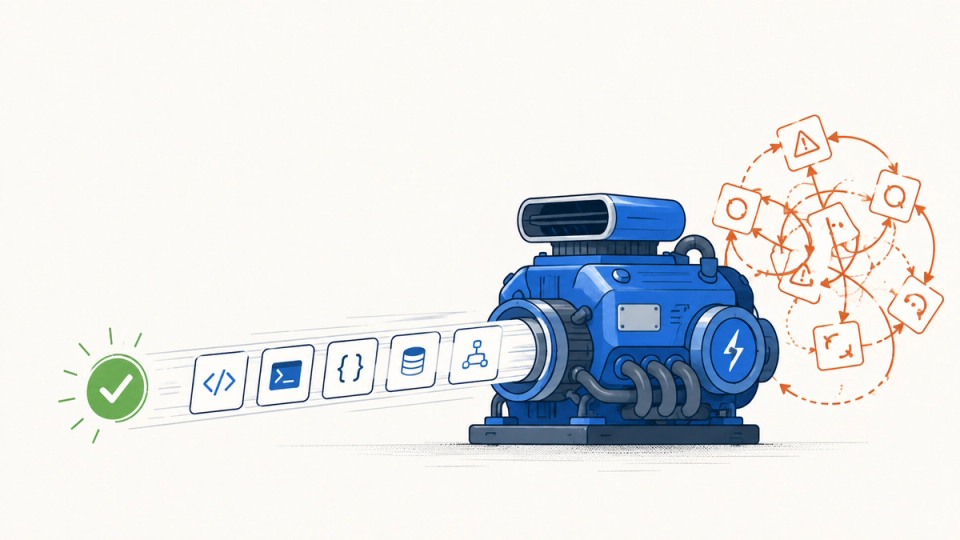
Google announced Gemini 3.7 Flash on August 13, 2026, as its latest workhorse model for coding and AI agents, with introductory API pricing of $0.75 per 1 million input tokens and $3.75 per 1 million output tokens through December 31. The release matters because Google is selling agent economics, not just another intelligence bump: cheaper calls are useful only if the model also finishes multi-step work with fewer retries and cleaner tool use.
This is a news analysis of what changed, what Google has not proven yet, and how builders should evaluate the model. The practical thesis is simple: Gemini 3.7 Flash is a compelling routing candidate for high-volume agent work, but its real advantage will be decided by cost per verified task rather than the launch-day rate card.
What Happened
Google introduced Gemini 3.7 Flash as a model aimed at software engineering, web development, and complex knowledge work. In its official announcement, Google positions it as its “most intelligent workhorse model yet” for coding and agents, with gains in first-pass code accuracy, UI design adherence, instruction following, planning, and tool calls.
The model is rolling out across the Gemini API, Google AI Studio, Google Antigravity, and Android Studio. Enterprise availability includes the Gemini Enterprise Agent Platform and Gemini Enterprise app. For individuals, Google says the model powers Gemini Spark for Google AI Pro and Ultra subscribers in places where Spark is available.
The launch price is temporary: $0.75 per 1 million input tokens and $3.75 per 1 million output tokens through December 31, 2026. From January 1, 2027, Google says pricing returns to $1.50 per 1 million input tokens and $7.50 per 1 million output tokens. That makes the introductory rate exactly half of the announced post-promotion price.
Google has not published a complete independent benchmark table in the announcement. Its claims are directional: better first-pass code, closer adherence to requested UI designs, stronger instruction following, and better adjustment when an agent encounters a roadblock. Those are the capabilities that determine whether an agent loop ends in one clean run or expands into retries, corrections, and human review.
The launch also extends beyond developer tooling. Google says Gemini Spark now runs on Gemini 3.7 Flash for multi-step work across Gmail, Google Calendar, and Google Docs. That gives the model a consumer-facing test bed for the same capability Google is selling to developers: planning across tools without losing the larger goal.
Is Gemini 3.7 Flash Actually Cheaper, or Just Cheaper on the Rate Card?
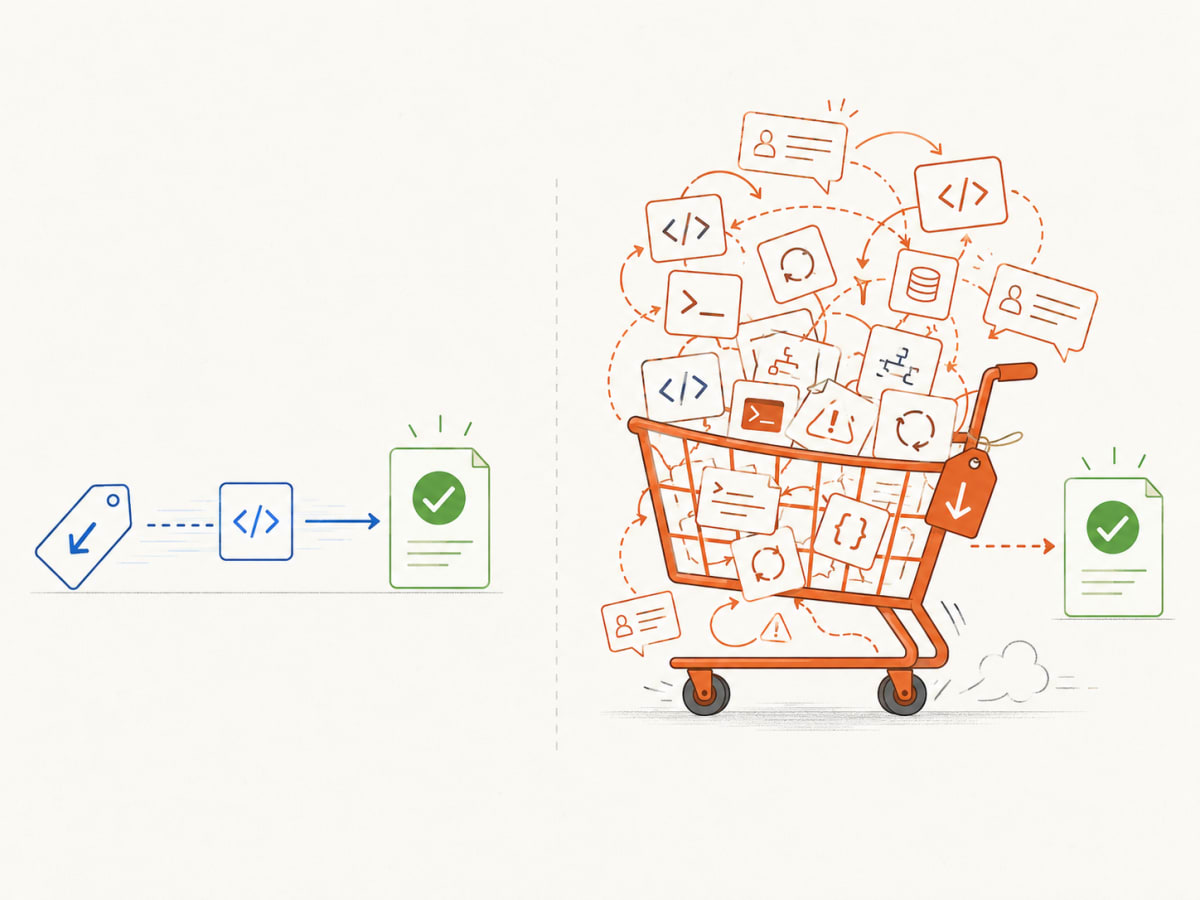
Gemini 3.7 Flash is cheaper at launch, but the rate card is not the same thing as workflow cost. Agent tasks pay for repeated context, tool results, retries, and output verbosity. The promotion makes experimentation unusually inexpensive; the post-2026 price is the number teams should use for serious architecture decisions.
At the introductory price, 10 million input tokens and 2 million output tokens would cost $15.00 before any other charges. At the announced 2027 rates, the same traffic would cost $30.00. That is a meaningful difference for prototyping and high-volume workloads, but it says nothing about whether the model completes those tasks reliably.
The important comparison is with the model you would otherwise route to. If Gemini 3.7 Flash needs two attempts to do what another model does in one, its apparent price advantage can disappear. If it handles a bounded task in one pass, the cheaper output rate compounds with the avoided retry.
This is the same shift identified in our analysis of Gemini 3.6 Flash and agent cost: builders should measure completed work, not tokens in isolation. Gemini 3.7 Flash makes that measurement more urgent because the introductory discount could make a weak workflow look economically viable for four months.
What Does “Better Tool Use” Mean in Production?
“Better tool use” should mean fewer stalled loops, fewer redundant calls, and safer recovery when a tool returns an error. Google’s announcement points to improved planning and roadblock handling, but it does not disclose a standardized task-completion rate or a failure taxonomy. Builders still need to test the behavior themselves.
A useful evaluation is a fixed task suite with a clear end state: inspect a repository, make a bounded change, run tests, report the diff, and stop. Record whether the agent reaches the end state, how many tool calls it makes, how often it retries, whether it edits unrelated files, and how much human correction is required.
That last measure is more important than speed. A fast agent that silently makes a wrong change creates review cost. A slower agent that exposes uncertainty and stops at a clear checkpoint may be cheaper in a real team. For a model positioned inside Antigravity and other agent-first development workflows, control over the loop is part of the product.
There is already a useful warning from early hands-on coverage. Testing Gemini 3.7 Flash on a large personal knowledge-management task, Tom’s Guide wrote that the model “handled constraints like a pro,” while also reporting missed unnamed files and imperfect sorting. That is not a benchmark, and one reviewer’s workflow cannot establish general reliability. It does show the exact pattern to test: instruction retention across a long task, source traceability, and graceful disclosure when the model is unsure.
Does Gemini 3.7 Flash Replace a Stronger Model?
No. The release is better understood as a routing option than a universal replacement. A workhorse model earns its place on repetitive, bounded, tool-heavy tasks where latency and cost matter. Ambiguous architecture decisions, high-impact changes, and long debugging threads still require a stronger model or a human checkpoint.
The most sensible architecture is a tiered one. Use a stronger model to plan or review high-risk work. Route extraction, test generation, issue triage, file inspection, and small UI iterations to Gemini 3.7 Flash. Escalate when the agent changes scope, fails the same check twice, or cannot explain the evidence behind its result.
This is consistent with the broader lesson from our use-case ranking of AI coding models: the best model is determined by the failure a workflow can afford. Gemini 3.7 Flash may be the right default for throughput without being the right default for every decision.
The Google ecosystem is part of the calculation. Gemini 3.7 Flash is available in Google’s API, Studio, Antigravity, Android Studio, and enterprise surfaces. That distribution can reduce integration friction for teams already using Google Cloud or Workspace. It can also create switching costs, so buyers should compare portable API behavior, observability, rate limits, and data controls before committing to a route.
Who This Affects
For solo developers and indie builders, the introductory price makes Gemini 3.7 Flash worth testing on agents that are currently too expensive to run continuously. Start with a ten-task suite, not an open-ended “build me an app” prompt. Keep the task, repository, and acceptance checks fixed; compare first-pass success, retries, wall-clock time, and total token spend.
For engineering teams, the useful role is likely the middle layer between a planner and deterministic tools. Use it for bounded coding changes, test scaffolding, structured repository inspection, and repetitive issue work. Require a diff, test output, and a summary of assumptions before accepting the result.
For enterprise buyers, the Google surface area is a benefit only if governance keeps up. Gemini Spark’s ability to work across Gmail, Calendar, and Docs demonstrates the upside of connected tools; it also raises the cost of an incorrect action. Keep writes behind approvals, preserve source links, and log which tool calls changed state.
What to Watch For Next
Watch three signals through the end of 2026.
First, whether Google publishes comparable benchmark and reliability data rather than capability claims alone. The missing number is not a leaderboard score; it is verified task completion under realistic tool use.
Second, whether developers report lower total agent bills after retries and review time are included. The introductory promotion will attract usage, but only post-promotion economics will reveal whether the architecture holds.
Third, whether Gemini 3.7 Flash becomes the default subagent model inside Antigravity, Gemini Spark, and enterprise workflows. If Google routes high-volume execution to it while reserving larger models for planning, the release will have changed the shape of agent stacks even without owning every benchmark.
The Bottom Line
Gemini 3.7 Flash is Google’s clearest attempt yet to make the “good enough” layer of agent infrastructure materially cheaper. The 2026 promotion is attractive, but the durable case depends on first-pass accuracy, instruction retention, tool recovery, and review burden.
Use it as a candidate for bounded, high-volume work. Do not promote it to the center of a production workflow because the rate card looks cheap. Run the same tasks against your current model, price the entire loop, and keep a human checkpoint wherever an incorrect tool call can change data, code, or money.
FAQ
What is Gemini 3.7 Flash?
Gemini 3.7 Flash is Google’s August 2026 workhorse model for coding, web development, complex knowledge work, and AI agents. It is available across the Gemini API, Google AI Studio, Antigravity, Android Studio, and selected enterprise and Gemini Spark surfaces.
How much does Gemini 3.7 Flash cost?
Google’s introductory price through December 31, 2026 is $0.75 per 1 million input tokens and $3.75 per 1 million output tokens. Google says the price becomes $1.50 per 1 million input tokens and $7.50 per 1 million output tokens on January 1, 2027.
Is Gemini 3.7 Flash good for coding agents?
Google claims better first-pass code accuracy, instruction following, UI design adherence, planning, and tool use. Those claims make it worth evaluating for coding agents, but the right test is completed-task cost with retries, tool calls, and human corrections included.
Should I use Gemini 3.7 Flash for every AI task?
No. It is best evaluated as a workhorse or subagent for bounded, repetitive, tool-heavy tasks. Keep stronger models or human review for ambiguous architecture, high-impact changes, and workflows where a wrong action is expensive.