
Antigravity vs Claude Code: Google IO Changed the Math
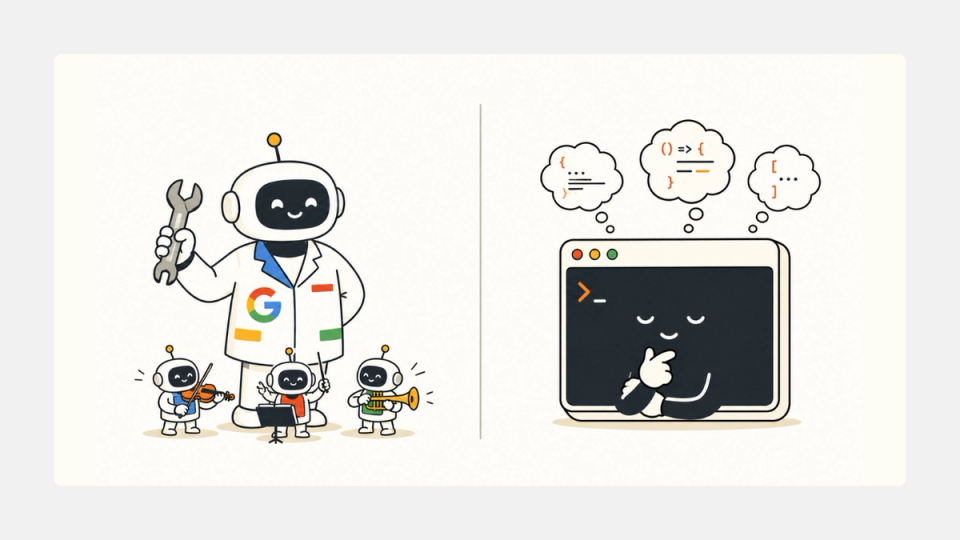
Google Antigravity is an agent-first development platform built by Google DeepMind, launched in its 2.0 form at Google I/O May 2026, operating as a standalone desktop application and CLI that orchestrates autonomous subagents across code, terminal, and browser.
Claude Code is Anthropic's terminal-native agentic coding assistant, designed for deep codebase reasoning and autonomous task execution, powered by Claude Opus 4.7 and Sonnet 4.6 with a 1 million token context window.
Both compete in the same space — replacing the "AI autocomplete" era with tools that can take a vague instruction and ship working code. But they have fundamentally different theories about how that happens. Antigravity bets on orchestration: many specialized agents working in parallel under your supervision. Claude Code bets on depth: one very capable agent thinking hard in your terminal.
After Google IO 2026, that philosophical gap got wider, not smaller. Here is what changed and who it matters to.
The Short Answer
For solo developers building side projects: Claude Code on a Pro plan ($20/month). Better reasoning quality, lower friction to start, predictable behavior.
For teams running long, multi-step autonomous workflows: Antigravity 2.0. The Mission Control paradigm genuinely earns its keep when you are delegating an entire feature — frontend, backend, browser verification — without babysitting each step.
For enterprise teams on Google Cloud: Antigravity, hands down. The Gemini Enterprise Agent Platform connects it to existing GCP compliance and data residency boundaries that Claude Code does not touch.
For developers who care most about code quality on complex refactors: Claude Code. The reasoning gap is real, even in 2026.
If you cannot decide: Start with Claude Code. The learning curve is lower, the free tier does not exist (you need a $20 Pro plan), but the ceiling is higher for single-agent deep work. Switch to Antigravity when you find yourself wishing you could run multiple things in parallel.
Why This Comparison Matters Now
Google IO 2026 (May 19–20, 2026) was not a minor update cycle. Google retired the Gemini CLI and replaced it with the Antigravity CLI. It moved the desktop app from an IDE plugin to a standalone Mission Control platform. It announced that Gemini 3.5 Flash would power the default agent harness. That is a full platform pivot, not a feature drop.
At the same time, Anthropic shipped Claude Sonnet 4.6 and Opus 4.7 with expanded 1 million token context windows and added "Auto Mode" permissions that reduce the number of human approvals needed during long agentic runs.
Both tools, in May 2026, are meaningfully different from what they were six months ago. The comparison table that was accurate in November 2025 is no longer accurate. This article reflects both tools as of May 2026.
Pricing verified May 2026. Benchmarks current as of May 2026.
Which Is Cheaper at Real Usage Levels?
Claude Code starts at $20/month (Pro plan). The Max 5x plan is $100/month. Max 20x is $200/month. There is no free tier with meaningful agentic usage. If you use the Anthropic API key instead of a subscription, you pay per token — at roughly $15 per million tokens for Opus 4.7 input — and heavy agentic sessions can cost $30–$80 per day at full utilization.
Antigravity is free for the Individual plan, with access to Gemini 3.5 Flash and weekly rate limits. Google AI Ultra — the tier serious developers need — costs $100/month and includes 5x capacity, 20TB of cloud storage, and YouTube Premium bundled in. Organization pricing runs through the Gemini Enterprise Agent Platform on Google Cloud with consumption-based API billing.
The non-obvious math here: if you are already paying Google AI Ultra at $100/month, Antigravity is effectively free as the development tool in your stack, because the subscription covers model access broadly. Claude Code at $100/month (Max 5x) gets you the coding agent alone. No storage, no other Google services included.
For teams already deep in Google Cloud, Antigravity's total cost of ownership is lower by default. For teams that are model-agnostic or already paying for Anthropic's API, Claude Code's pay-as-you-go ceiling is more predictable.
Which Handles Context Better?
This is where the tools genuinely diverge at a technical level.
Claude Code's 1 million token context window — live as of Opus 4.7 and Sonnet 4.6 in 2026 — is the most practical large-context implementation available. You can load an entire codebase, documentation, and conversation history into a single session. Anthropic's "lazy loading" for tools prevents context bloat by switching to a lightweight search index if tool descriptions consume more than 10% of the context. For senior engineers doing architectural refactors across large repos, this is the strongest context implementation in the market.
Antigravity manages context differently: automatic compaction triggers at approximately 135,000 tokens per agent session. That sounds limiting compared to a 1 million token window, but the system compensates by offloading state to a "Learning" knowledge base that agents can query across sessions. Each subagent maintains its own context budget. The orchestrator does not share context between agents by default — they communicate via structured task outputs.
The practical result: Claude Code wins for single-agent, deep-reasoning tasks where full codebase context matters. Antigravity wins for multi-step workflows where the total context you need would exceed any single window, because it distributes context across specialized agents rather than stuffing everything into one.
"The 1 million token context is the biggest unlock for complex refactors. It's the first time I've been able to load our entire monorepo without chunking," wrote a senior engineer at a Series B startup in a widely cited Hacker News thread in April 2026.
How Do Skills and Environment Customization Work?
Both tools use the concept of "skills" — reusable instruction files that teach the agent how to handle specific tasks. But the implementation differs.
Claude Code skills are SKILL.md files stored in .claude/skills/<skill-name>/ within your project. They are model-invoked — Claude decides when to load them based on the task context. Skills can bundle slash commands, MCP server configs, and reusable prompts. The CLAUDE.md file at the project root sets global project context that is loaded into every session. Permission controls live in .claude/settings.local.json, where you grant or deny specific bash commands and tools. MCP (Model Context Protocol) is the extension layer for connecting Claude Code to external APIs, databases, and services — over 1,000 community MCP servers exist as of May 2026.
Antigravity skills follow the same file-based pattern: SKILL.md files in .antigravity/skills/ (migrated from the former .gemini/agents/ directory). The key difference is the loading model: Antigravity uses "progressive disclosure," loading the matching skill file only when the agent determines the task requires it, preserving context budget. Antigravity also supports global skills stored in your home directory for cross-project reuse. The .antigravity.md file (renamed from .gemini.md) sets project-level context.
On the environment side, Antigravity runs agents in secure, Google-hosted Linux sandboxes via the Gemini API agent harness. Code execution, file management, and browser interaction happen inside the sandbox. Antigravity CLI shares the same harness as the desktop app, so switching between a terminal and GUI session is seamless.
Claude Code's environment is local by default. Bash commands run on your machine under the permission model defined in settings.local.json. The "Auto Mode" permissions classifier screens tool calls and blocks actions flagged as destructive. Enterprise users can add sandboxed bash execution, but the default is local execution with a whitelist — more explicit, more cautious.
Spinning Up: How to Get Started with Each
Claude Code
# macOS / Linux
curl -fsSL https://claude.ai/install.sh | bash

# Windows (PowerShell)
irm https://claude.ai/install.ps1 | iex

# Alternative (npm)
npm install -g @anthropic-ai/claude-code
After install, type claude in your terminal. You'll be prompted to authenticate via Claude.ai or set an ANTHROPIC_API_KEY. The first run guides you through creating a CLAUDE.md at your project root. For MCP tools, add them to your project's .mcp.json file.
Minimum requirement: Claude Pro at $20/month. Free tier does not support agentic workloads.
Antigravity
Desktop app:
- Visit antigravity.google and download the installer for your OS.
- macOS: open the
.dmg, drag to Applications, sign in with your Google account. - On first launch, import VS Code/Cursor settings or start fresh.
CLI:
# macOS / Linux
curl -fsSL https://antigravity.google/cli/install.sh | bash

# Windows (PowerShell)
irm https://antigravity.google/cli/install.ps1 | iex
Migrating from Gemini CLI: rename .gemini.md to .antigravity.md and move your agents from .gemini/agents/ to .antigravity/agents/. The Gemini CLI no longer receives updates as of May 2026.
Minimum requirement: the Individual plan is free. For serious agentic workloads, Google AI Ultra at $100/month removes rate limits.
The Comparison Table

Pricing as of May 2026.
Where Antigravity Actually Wins
Antigravity 2.0 is the right tool when the task is bigger than any single agent can hold in context. Think: "Stand up an authentication system end to end — design the DB schema, implement the API, write the tests, verify the login flow in a browser." That is four or five discrete specializations. Antigravity spawns subagents, runs them in parallel in sandboxed Linux environments, and surfaces the results in its Mission Control view as reviewable artifacts — not raw terminal logs.
Developers who have spent time in Google Cloud find the handshake natural. Antigravity agents can connect to Cloud SQL, BigQuery, Pub/Sub, and Cloud Storage through the Gemini Enterprise Agent Platform without leaving the IDE. If your stack is already GCP-native, the integration is compelling.
It is also genuinely free to start. Individual plan access with Gemini 3.5 Flash gives you a real taste of the orchestration paradigm before committing $100/month. Claude Code gives you nothing at zero cost.
Where Antigravity Actually Loses
Rate limits. Developers on Reddit and Hacker News in May 2026 consistently flag erratic quota behavior — tasks failing mid-run because a subagent hit a quota ceiling. At the Individual tier, this is expected. At AI Ultra, it still happens sporadically, which frustrates developers who gave the platform a serious trial.
The reasoning quality ceiling on Gemini 3.5 Flash is real. For tasks that require nuanced judgment about code architecture, detecting a subtle bug in a multi-layered abstraction, or explaining why a refactor should go one way versus another, Flash does not match Opus 4.7. Google has positioned Flash as the default for speed and cost; the intelligence tradeoff is a deliberate choice, not a bug.
"Fork fatigue" is emerging in the developer community. Cursor already forked VS Code. Antigravity also forks VS Code. Both claim to be your primary coding environment. Developers who have committed their keybindings, extensions, and muscle memory to Cursor are not enthusiastic about switching to another VS Code variant, regardless of the agentic features on offer.
Where Claude Code Actually Wins
Complex, reasoning-heavy tasks. Architectural refactors across a large repo. Debugging a subtle concurrency issue. Explaining why a codebase design will cause problems at scale. These are tasks where the quality of reasoning matters more than the speed of orchestration, and Claude Opus 4.7 is measurably ahead of Gemini 3.5 Flash on them.
The MCP ecosystem is also a genuine advantage. Over 1,000 community MCP servers exist — covering databases, CI/CD, analytics tools, observability platforms, CRMs, and more. You can connect Claude Code to Sanity, Supabase, GitHub, Linear, Sentry, PostHog, and dozens of others via standard .mcp.json configuration. Antigravity's SDK is new; the ecosystem has not had time to grow yet.
For teams on any cloud that is not GCP — AWS, Azure, self-hosted — Claude Code's extension model is more cloud-agnostic. MCP does not care where your data lives. The Antigravity Enterprise platform assumes Google Cloud.
The Non-Obvious Insight
Both tools now use SKILL.md files to extend agent behavior. That is not a coincidence. It is convergence. The SKILL.md pattern — a markdown file bundled with a tool that tells the agent how to behave for a specific task — was pioneered by Claude Code's community, then adopted by Antigravity. The fact that you can write skills for both tools using essentially the same format means the real competitive advantage is not the skill system itself. It is the model and the orchestration layer sitting behind it.
If you are a developer who invests in writing good skills and good CLAUDE.md / .antigravity.md context files, you will get strong results from either tool. The skill system is learnable and portable. The model quality and rate limits are not.
Pick based on model + price fit for your workload, not based on which skill format you prefer.
The Bottom Line
After Google IO 2026, Antigravity is no longer a Gemini plugin with ambitions. It is a credible, standalone agent platform with a coherent orchestration story. For developers running autonomous multi-agent workflows — especially in Google Cloud environments — it is now the strongest argument for leaving Claude Code's terminal behind.
But Claude Code's 1 million token context window and the reasoning quality of Opus 4.7 remain a real ceiling that Antigravity's Flash-powered subagents have not matched. For senior engineers doing the hardest class of tasks — large refactors, deep debugging, architectural decisions — Claude Code still wins.
Most professional developers will end up using both: Antigravity for long-running orchestration and automation, Claude Code for depth when it matters. At $20/month for Claude Pro and $0 for Antigravity Individual, running both costs less than a single dinner.
Start with Claude Code. Add Antigravity when your tasks outgrow a single agent.
FAQ
Is Antigravity the same as the old Gemini CLI?
No. Google retired the Gemini CLI at Google IO 2026 and replaced it with the Antigravity CLI. The two share lineage but the Antigravity version is co-optimized with Gemini 3.5 Flash, adds the desktop Mission Control app, and introduces native subagent orchestration. Migration requires renaming .gemini.md to .antigravity.md and moving agents to .antigravity/agents/.
Can I use Claude Code and Antigravity on the same project?
Yes, and many developers do. Claude Code handles the deep reasoning tasks in the terminal while Antigravity orchestrates multi-step autonomous workflows. Both use SKILL.md files in compatible formats, so skills can be adapted across both tools with minor edits.
Does Antigravity work with models other than Gemini?
Yes, at the Individual plan level, Antigravity exposes access to Claude Sonnet/Opus and other third-party models alongside Gemini 3.5 Flash. The default agent harness runs Flash, but you can switch models per session. Enterprise plan access and MCP equivalence for non-Gemini models are more limited.
Why does Claude Code not have a free tier in 2026?
Anthropic's position is that meaningful agentic workloads require sustained high-quality compute that cannot be subsidized at zero cost without degrading the experience. Free Claude.ai accounts include the chat UI but not CLI-level agentic access. The $20/month Pro plan is the minimum for terminal-based usage.
Is Antigravity's rate limiting fixed yet?
As of May 2026, rate limit reliability has improved on AI Ultra ($100/month) compared to the Individual free tier, but erratic quota behavior during long multi-agent runs is still a known pain point. Google has acknowledged it as a priority. For production-critical autonomous workflows, teams are maintaining manual checkpoints until the quota system stabilizes.
Which tool is better for teams, not solo developers?
Both have team plans, but they optimize for different team types. Claude Code Teams ($25–$125/seat/month) adds admin controls and SSO. Antigravity's team story runs through the Gemini Enterprise Agent Platform on Google Cloud, which is stronger for orgs already using GCP IAM and VPCs. If your team is cloud-native on GCP, Antigravity is the more natural fit. If you are cloud-agnostic, Claude Code's flexibility and MCP ecosystem serve broader stacks better.