
OpenAI Is Building a Phone. It Wants to Kill the App Store.
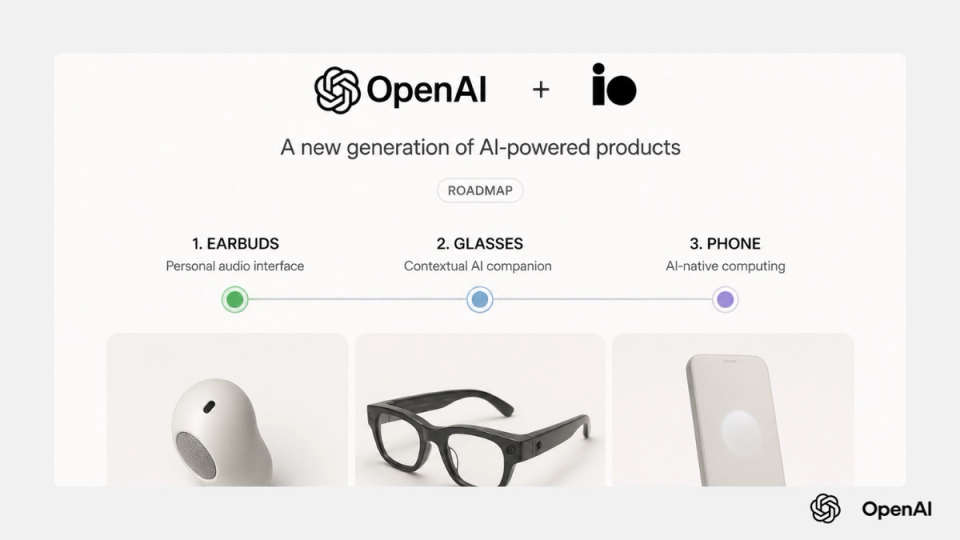
There have been moments in tech that looked like product announcements but were really warnings. When Apple unveiled the original iPhone in 2007, Nokia's CEO reportedly called it "cute." When Amazon launched AWS, most enterprise software companies didn't even notice. What analyst Ming-Chi Kuo posted on X last Sunday carries that same energy, except this time it is aimed directly at the two companies that have controlled your phone for twenty years.
Kuo, the analyst who has predicted Apple's supply chain moves with near-perfect accuracy for over a decade, says OpenAI is developing its own smartphone. Not a ChatGPT-branded Android with AI features bolted on as an afterthought. A purpose-built device with custom chips co-developed with Qualcomm and MediaTek, manufactured by Luxshare, and targeting mass production in 2028. Per TechCrunch's coverage of the report, the goal is to replace apps entirely with AI agents.
The Phone That Does Not Want to Be a Phone
Kuo's note puts it plainly: users are not trying to open apps. They are trying to get things done. That might sound obvious, but no phone has actually been built around that idea yet. Every smartphone since 2007 has been fundamentally the same thing: a grid of icons, each one a door to a different service, and the user doing all the navigation themselves.
What OpenAI is reportedly imagining is a device where you describe what you need, and an AI agent handles the rest. Book the restaurant, reply to the email, order the cab. No icons. No switching between apps. The phone stops being something you operate and starts being something that works on your behalf.
The chip design supports this. According to Dataconomy, simple context-aware tasks would run locally on the device for speed and privacy, while complex requests route to OpenAI's cloud models. It is a hybrid setup, and it is not unlike what Apple has been trying to do with Apple Intelligence. The difference is that OpenAI would own the entire stack from the chip up, with none of the system-level restrictions that Apple and Google currently place on third-party AI.

Who Is Actually Building This
Jony Ive leads design. His startup io was acquired by OpenAI for $6.4 billion in May 2025, and he now oversees all hardware design across the company. This is the person who designed the iPod, the iPhone, and the MacBook Air. When Altman paid that price, he was not buying a factory. He was buying a design philosophy and a track record that most hardware companies would spend a decade trying to build.
Qualcomm and MediaTek are co-developing the custom smartphone processor with OpenAI. Final chip specifications are expected to be confirmed by late 2026 or early 2027, with key design priorities around power efficiency, memory management, and on-device inference for small AI models.
Luxshare is the exclusive manufacturing and co-design partner, with mass production targeted for 2028. Some reports also point to Foxconn as a potential backup, particularly given ongoing supply chain sensitivities around mainland China.
How OpenAI Got to This Point
In May 2025, OpenAI acquired Jony Ive's hardware startup io for $6.4 billion, making its hardware ambitions official. Earlier this year, the company's Chief Global Affairs Officer Chris Lehane confirmed publicly that OpenAI is on track to announce its first hardware product in the second half of 2026, widely expected to be AI-powered earbuds. Per Kuo's report, the smartphone is a separate and longer-term program, with chip specs locking in by end of 2026 and mass production beginning in 2028.
Why This Could Work. And Why It Probably Won't.
The core idea is not crazy. It is the logical place where AI is heading. If your phone's AI can book your flight, reply to your messages, and handle your calendar without you tapping a single app, then what exactly is the app for? The app store model exists because someone needs to organize software. If AI becomes the organizer, the whole structure starts to look redundant. OpenAI understands this. So does Apple, which is why the tension between them has been quietly building for years.
But the history of devices that tried to kill apps is not encouraging. The Humane AI Pin got discontinued. The Rabbit R1 received broadly negative reviews. Both promised a new way of interacting with technology, and both discovered the same thing: people are attached to their apps not because apps are great, but because they are familiar. Replacing an Instagram tap with a voice command is not a design problem. It is a psychology problem, and two billion people do not rewire their habits because a new device tells them to.
What OpenAI has that those products never had is genuine scale. As Android Headlines notes, OpenAI already has 900 million weekly ChatGPT users. That is not a niche audience. It is a real installed base. If even a fraction of those people would move to a device where ChatGPT is the operating layer rather than just an app, OpenAI has a sustainable business. It does not need to beat Apple. It just needs to hold the people who are already living inside ChatGPT anyway.
My honest read is that the phone will launch. It will be well-designed because Jony Ive does not make ugly things. It will get enormous media coverage and find a genuine audience among early adopters. Whether it displaces the iPhone in any meaningful way is a separate question entirely, one that would take a decade and an ecosystem that OpenAI does not yet have. But as a signal of where computing is heading, this is the clearest one we have seen from any AI company.
The Problem Nobody Is Saying Directly
AI agents still make mistakes. They misread context, they hallucinate details, they sometimes do the wrong thing with the right intent. On a phone where agents replace apps entirely, a single bad output is not a minor annoyance. It is a missed flight, a wrong bank transfer, or a message sent to the wrong person.
Apple and Google did not build walled gardens out of pure greed. They built them because trust at the hardware level takes years to establish and almost nothing to destroy. Every time an agent makes a visible error on this device, it will become a story. OpenAI's reliability has improved significantly, but its track record at the hardware level is still blank.
There is also a competitive reality worth stating. By 2028, Apple Intelligence will have had two years to mature inside iOS. Google's Gemini will be embedded deeply in Android. Samsung will have its own agentic layer running on Galaxy devices. OpenAI is not walking into an open market. It is entering one already occupied by companies with carrier relationships, decades of retail presence, and consumer trust that predates ChatGPT by a long stretch.
"The question was never whether this phone would exist. It is whether people will trust it enough to hand over their whole digital life."
None of this makes failure inevitable. But it does mean the launch needs to go well, and the margin for early mistakes is narrow. If the earbuds later this year land solidly and establish OpenAI as a credible hardware brand, the phone has a story to build on. If they stumble, the credibility cost going into 2028 will be real.
The direction is set regardless. The app era does have a clock on it, and this phone is the first open declaration of that from a company with the resources and the user base to actually follow through. Whether OpenAI delivers on it first, or Apple quietly absorbs the concept into a future iOS version, is almost beside the point. Someone is going to build this. And when they do, the smartphone we know today will start to look the way the flip phone looked in 2008: perfectly functional, completely familiar, and quietly on its way out.