
Muse Spark's Real Superpower Isn't Reasoning. It's Seeing.
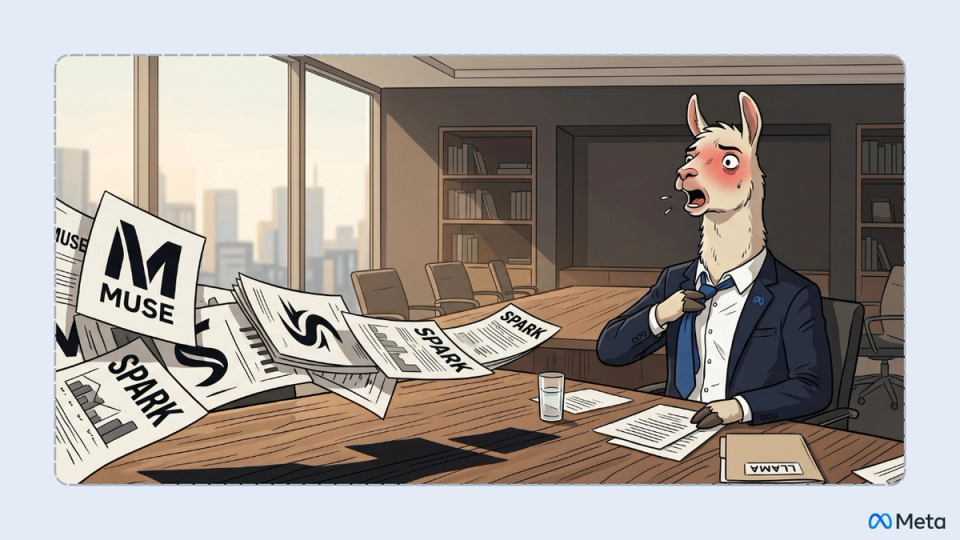
Most coverage of Meta's new AI model has focused on the corporate drama: the $14.3 billion Scale AI deal, the death of open source Llama, Alexandr Wang's nine-month sprint. All interesting. But it misses what actually makes Muse Spark different from the model it replaces and, in one critical dimension, different from everything else on the market.
Muse Spark is not just another text model that learned to look at pictures. It is a model that was built, from the first training run, to think visually. And that distinction has real consequences for what AI assistants can actually do for you in the physical world.
What "Natively Multimodal" Actually Means
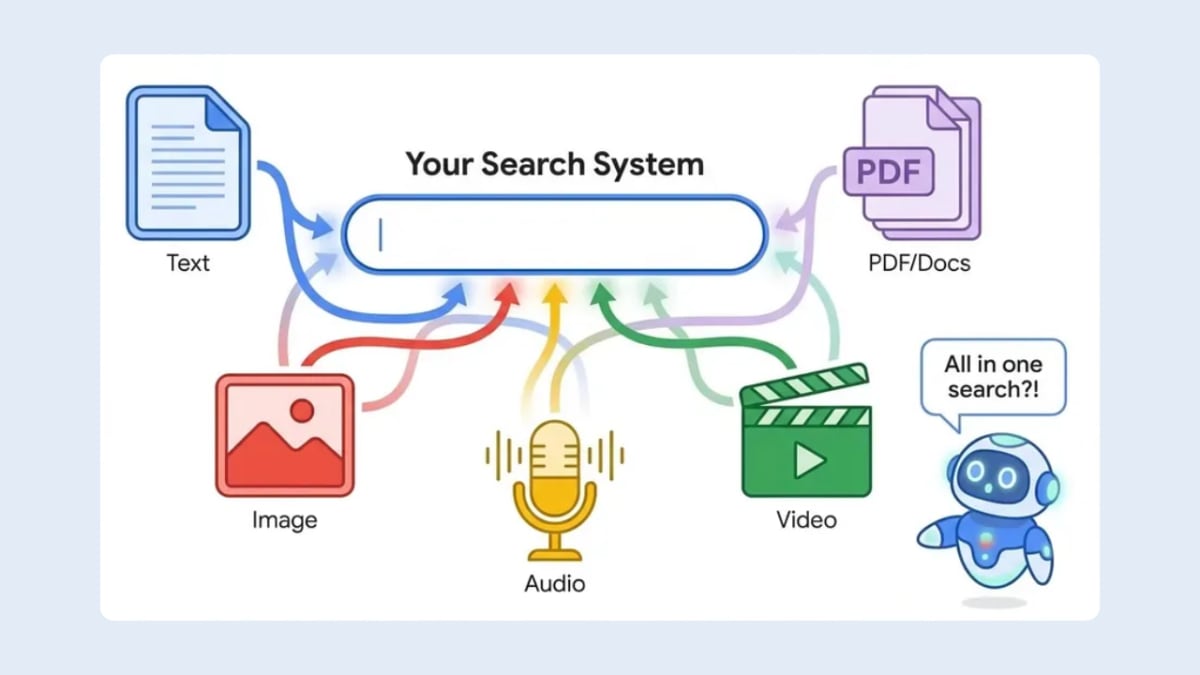
Every major AI model today can accept images. You can paste a screenshot into ChatGPT or Claude, and it will describe what it sees. But there is a meaningful architectural difference between a language model with a vision module bolted on top and a model trained from scratch to fuse visual and textual reasoning at every layer.
Meta calls this "natively multimodal." Stripped of the marketing, it means Muse Spark was not a text model first. It processed images and text together during pretraining, which means visual understanding is not an add-on feature. It is part of how the model reasons.
The practical difference shows up clearly in benchmarks that test visual reasoning, not just image recognition.
On CharXiv Reasoning, a benchmark that measures how well a model can interpret complex charts and figures, Muse Spark scored 86.4 in its Contemplating mode. For comparison, GPT-5.4 scored 82.8, Gemini 3.1 Pro scored 80.2, and Claude Opus 4.6 scored 65.3, according to Meta's published results and VentureBeat's analysis.
On MMMU Pro, which tests multimodal understanding across academic domains, Muse Spark scored 80.4, making it the second most capable vision model tested, trailing only Gemini 3.1 Pro Preview at 83.9, according to Artificial Analysis's independent audit.
And here is the number that should get more attention: on ScreenSpot Pro, a benchmark that tests whether a model can locate specific UI elements in a screenshot, Muse Spark scored 72.2 without tools. GPT-5.4 scored 39.0. Claude Opus 4.6 scored 57.7. That is not a marginal gap. Muse Spark is nearly twice as accurate as GPT-5.4 at understanding what is on a screen, according to MarkTechPost's benchmark analysis.
These are not cherry-picked wins. Muse Spark trails competitors in coding (59.0 on Terminal-Bench versus GPT-5.4's 75.1) and abstract reasoning (42.5 on ARC-AGI-2 versus GPT-5.4's 76.1), according to Artificial Analysis data. But on tasks where the model needs to see, understand, and reason about visual input, it is consistently among the best, and in several categories, the outright leader.
Visual Chain of Thought: Not Captioning, Reasoning
The feature Meta highlights most around Muse Spark's vision is "visual chain of thought." This deserves scrutiny because it could mean very little or quite a lot, depending on implementation.
What it appears to mean, based on Meta's technical blog and the benchmark results, is that Muse Spark does not just identify objects in an image and spit out a label. It reasons through visual information step by step, much like how reasoning models think through math problems before giving an answer.
Meta demonstrated this with practical examples: the model can look at a shelf of snacks at an airport and rank them by protein content without the user needing to read any labels. It can identify the components of a complex espresso machine. It can look at a yoga pose in a video and suggest corrections based on body positioning.
These are not party tricks. They represent a different kind of interaction with an AI assistant. Instead of the user describing a visual scene in text and hoping the model understands, the model is doing the seeing itself and reasoning about what it observes.
The implications are clearest on Meta's Ray-Ban AI glasses. A model that genuinely understands visual context transforms smart glasses from a voice-activated search bar into something closer to an assistant that shares your field of view. Point at a restaurant menu in a foreign language and get a translation. Look at a building and ask what it is. Scan a product on a shelf and get a price comparison. All of these require the model to understand spatial relationships, read text in images, and connect visual information to world knowledge simultaneously.
Whether Muse Spark can do all of this reliably in the real world remains to be seen. Benchmarks test controlled conditions. The real test is what happens when you point your glasses at a cluttered kitchen counter with poor lighting and ask for cooking advice. But the benchmark gap between Muse Spark and its competitors on visual tasks suggests Meta has a genuine technical edge here, not just marketing.
Health: Where Vision Meets Genuine Utility
Meta has leaned heavily into health as a differentiator for Muse Spark, and the vision capabilities are central to why.
The model scored 42.8 on HealthBench Hard, a benchmark of 1,000 open-ended health queries. GPT-5.4 scored 40.1. Claude Opus 4.6 scored 14.8. Gemini 3.1 Pro scored 20.6. Those are numbers from Meta's published benchmarks and independently corroborated by several third-party analyses.
Meta says it collaborated with over 1,000 physicians to curate training data specifically for health reasoning. The result is a model that can do things like analyze a photo of a meal and provide detailed nutritional information, interpret visual health data, or generate interactive displays explaining muscle groups activated during exercise.
The combination of strong visual understanding and physician-curated health training creates a use case that neither a pure text model nor a basic image recognition system can match. A text model needs you to describe your meal. A basic vision model can identify food but cannot reason about nutritional content in context. Muse Spark, at least in Meta's demonstrations, can do both. (The usual caveat applies: this is health information, not medical advice.)
Health is the most compelling application of Muse Spark's visual reasoning because it is a domain where seeing, understanding, and explaining visual information has immediate everyday value for billions of people.
How It Stays Fast While Thinking Hard
Meta describes Muse Spark as "small and fast by design." That raises an obvious question: how does a smaller model compete with frontier giants on vision benchmarks?
Two techniques make this work. The first is "thought compression." During reinforcement learning, Meta penalizes the model for excessive thinking time. This forces the model to solve problems with fewer reasoning tokens without sacrificing accuracy. The practical result, according to Meta's technical blog: Muse Spark reaches Llama 4 Maverick's capability with over ten times less compute. In Artificial Analysis's full evaluation, Muse Spark used just 58 million output tokens, compared to Claude Opus 4.6's 157 million and GPT-5.4's 120 million.
The second is Contemplating mode, the most architecturally novel feature. Where GPT Pro and Gemini Deep Think scale intelligence by making a single model think longer, Muse Spark spins up multiple sub-agents that reason in parallel. Same intelligence, lower latency, because the agents work simultaneously. In benchmarks, Contemplating mode reached 58.4% on Humanity's Last Exam With Tools and 38.3% on FrontierScience Research, matching or exceeding GPT-5.4 Pro and Gemini Deep Think on both, according to Meta's published results.
For vision specifically, this matters more than it sounds. A model serving three billion users on WhatsApp, Instagram, and Ray-Ban glasses cannot take thirty seconds to process a photo. Token efficiency is not a technical footnote. It is what makes real-time visual AI possible at scale.
What Muse Spark Cannot Do
Honesty about limitations is more useful than hype about strengths.
Muse Spark trails significantly in coding. Its Terminal-Bench score of 59.0 is far behind GPT-5.4's 75.1. If you are a developer looking for a coding assistant, Muse Spark is not the model for you right now. Meta acknowledges this gap explicitly in its technical blog.
Abstract reasoning is another weakness. The ARC-AGI-2 score of 42.5 versus GPT-5.4's 76.1 and Gemini 3.1 Pro's 76.5 is the single largest gap in the benchmark table. This benchmark tests pattern recognition and logical reasoning on novel puzzles, and Muse Spark is clearly behind.
Agentic capabilities, where the model independently completes multi-step tasks, are also lagging. The model scored 1,444 ELO on GDPval-AA versus top competitors scoring above 1,600, according to Artificial Analysis data.
And perhaps most importantly: Muse Spark is currently proprietary and limited to Meta's ecosystem. You cannot download the weights. You cannot fine-tune it. You cannot run it on your own infrastructure. It works inside Meta AI, and that is it. A "private API preview" is available to select partners, but broad developer access does not exist yet. This is a sharp departure from Meta's Llama-era open source philosophy.
The Bigger Picture: Vision as the Next Interface
The AI industry has spent three years optimizing models primarily for text: writing, coding, summarizing, analyzing documents. Important tasks, but a narrow slice of how humans actually interact with the world. Most of daily life is visual. You look at things, interpret spatial relationships, read signs and labels, assess situations by seeing them.
Meta is betting that the next evolution of AI assistants is not a better chatbot. It is a model that sees the world through your phone camera or your smart glasses. That is the real meaning of "personal superintelligence": not a general-purpose genius, but an assistant integrated into your daily visual experience.
The execution risks are real. US-only at launch. Glasses integration has not shipped yet. Independent testing outside Meta's platforms is limited. And the closed-source decision means developers cannot build on Muse Spark the way they built on Llama.
The Bottom Line
Muse Spark is not the best AI model across every category. It trails in coding, abstract reasoning, and agentic tasks. But on visual understanding and reasoning, it has a legitimate claim to being the strongest model available right now. The CharXiv, ScreenSpot Pro, and HealthBench scores are not marginal wins. They represent meaningful leads over models from OpenAI, Google, and Anthropic.
The practical value: Muse Spark is free, it is built into apps you already use, and it is unusually good at understanding what you show it. When the Ray-Ban glasses integration ships in the coming weeks, it will be the first AI assistant that genuinely sees the world with you rather than waiting for you to describe it.
Every other major AI lab optimized for the text box. Meta just optimized for the camera. That is not a small bet. It is a different theory of what AI assistants are for.